
BANKING & CASH MANAGEMENT
Your cash should have jobs, not just an account.
For retirees and good savers, the real banking question is usually not “which bank is best?” It is how much cash needs to stay liquid, how much can earn more, and how to keep large balances protected and easy to reach.
A high APY is useful. But yield comes after the money's job, access needs and protection are clear.
THE CASH STACK
One household. Different jobs.
The account should follow the job. That is why one “best bank account” rarely solves every cash decision.
What are you trying to make your cash do?
Do not multiply all spending by a rule of thumb if reliable income already covers part of it.
First identify how much annual spending actually depends on the portfolio. Then decide how much of that gap you want available without selling investments.
ILLUSTRATIVE CASH RUNWAY$24,000Six months of the $48,000 annual portfolio gap.
ILLUSTRATIVE CASH RUNWAY$48,000Twelve months of the $48,000 annual portfolio gap.
ILLUSTRATIVE CASH RUNWAY$96,000Twenty-four months of the $48,000 annual portfolio gap.
Teaching example only, not a recommendation to hold 6, 12 or 24 months. The appropriate reserve depends on reliable income, upcoming large expenses, withdrawal strategy, taxes, risk tolerance, access to other liquid assets and the cost of holding too much cash.
The best place for cash changes with when you need it.
Pick the job. Then compare the account features that matter for that job.
PRIMARY FIT
Checking or a transaction-ready cash account
For money that must pay bills, handle debit/ATM use, receive deposits or move by ACH/wire, reliability and access usually matter more than squeezing out the last bit of yield.
- Prioritize
- Bill pay, transfer speed, ATM/branch access, wires, fraud controls
- Verify
- Monthly fees, minimums, transfer limits, check and wire policies
- Protection
- FDIC/NCUA coverage when held as an insured deposit within applicable limits
PRIMARY FIT
High-yield savings or a bank money market deposit account
For reserves you want accessible but not mixed into daily spending, compare APY with transfer speed, minimums, fees and deposit-insurance structure.
- Prioritize
- Competitive APY, easy transfers, clean FDIC/NCUA coverage
- Verify
- Balance tiers, rate conditions, withdrawal/transfer rules, partner-bank disclosures
- Do not confuse
- A bank money market deposit account with a money market mutual fund
PRIMARY FIT
CDs or short-term Treasury bills when the date is known
A known purchase or tax bill can sometimes be matched to a maturity date instead of leaving every dollar fully liquid. CDs and Treasury bills have different protections and exit mechanics.
- CD
- Bank deposit, potentially FDIC-insured; check maturity, renewal and early-withdrawal terms
- Treasury bill
- U.S. government security, not an FDIC-insured bank deposit; available in maturities from 4 to 52 weeks
- Verify
- The money is not needed before maturity or that you understand the cost/process of exiting early
PRIMARY QUESTION
What is the brokerage actually doing with the cash?
Uninvested brokerage cash may be swept to bank deposits or invested in a money market fund. Those can look similar on the screen but carry different protections and yields.
- Bank sweep
- May qualify for FDIC insurance subject to the participating-bank and ownership rules
- Money market fund
- A mutual fund, not FDIC insured; generally invests in short-term debt instruments
- Verify
- Current yield, fees, settlement/access, sweep destination and insurance/protection disclosures
Account names are not enough. Read the product and sweep disclosures so you know whether you own a bank deposit, a security, or something routed through partner banks.
On a large balance, a small APY difference becomes real money.
Rate shopping matters more as the balance grows. But compare the yield difference only after the account passes the access, insurance and fee tests.
ILLUSTRATIVE BALANCE
$250,000
Assume the balance stays constant for one year.
APPROX. ONE-YEAR DIFFERENCE$1,250
APPROX. ONE-YEAR DIFFERENCE$2,500
APPROX. ONE-YEAR DIFFERENCE$5,000
Simple illustration: balance × APY difference. Before tax, assuming the same starting balance and no deposits or withdrawals.
BEFORE YOU MOVE CASH FOR YIELD
- Confirm protection.Which institution actually holds the deposit or security?
- Confirm access.How long does it take to move money back when you need it?
- Confirm the full rate.Is the APY balance-tiered, promotional or conditional?
- Confirm the friction.Fees, minimums, wire rules, service and account ownership can matter more than a small rate edge.
A USEFUL NEXT STEP
Want the cash decision connected to the rest of the plan?
The Financial Clarity Newsletter connects banking and cash decisions to retirement spending, investing, taxes and the trade-offs that actually determine how much should stay liquid.
$250,000 is the standard limit, not necessarily the household's total limit.
FDIC's standard deposit insurance amount is $250,000 per depositor, per insured bank, per ownership category. Different account product names at the same bank do not create new ownership categories.
ILLUSTRATION · $600,000 · ONE OWNER · ONE OWNERSHIP CATEGORY
Change the number of insured banks.
Bank A$600K
Within illustrated standard coverage: $250KAbove the illustrated standard limit: $350K
Bank A $300KBank B $300K
Within illustrated standard coverage: $500KAbove the illustrated standard limits: $100K
Bank A $200KBank B $200KBank C $200K
Within the illustrated standard limits across three separately insured banks: $600K
Actual coverage can be higher when valid ownership categories differ. For trust deposits, FDIC's current rules can provide up to $1.25 million per trust owner when five or more eligible beneficiaries are named and requirements are met. Verify the trust rules with FDIC, then use EDIE for the exact structure.
Know whether you have a deposit or an investment.
Eligible deposits at an FDIC-insured bank are covered under FDIC rules up to applicable limits.
Think: deposit insurance + bank access rules.Not FDIC insured because it is not a bank deposit. Treasury securities are obligations of the U.S. government.
Think: maturity + Treasury market mechanics.A mutual fund holding short-term securities. It is not a bank account and is not FDIC insured.
Think: fund yield, expenses, liquidity and investment protection rules.Go deeper where the cash decision changes.
These are intentional next reads, not a list of whatever was published most recently.
PROTECT LARGE CASH BALANCES
FDIC Insurance Limits 2026: How $250,000 Coverage Works
Use this before spreading money across accounts or banks. It explains the standard FDIC limit, ownership categories, trust deposits and fintech pass-through questions.
Read the guide →
SIZE THE RESERVE
Rainy Day Fund vs. Emergency Fund vs. Cash Reserves
Use this when the problem is not the bank but the amount of liquidity. Separate predictable spending, emergencies and a broader cash reserve.
Read the guide →
CONNECT CASH TO THE PORTFOLIO
Asset Allocation for Retirees: Stocks, Bonds & Cash
Use this when cash has become an investment-allocation question. The job is to coordinate liquidity with stocks, bonds and retirement withdrawals.
Read the guide →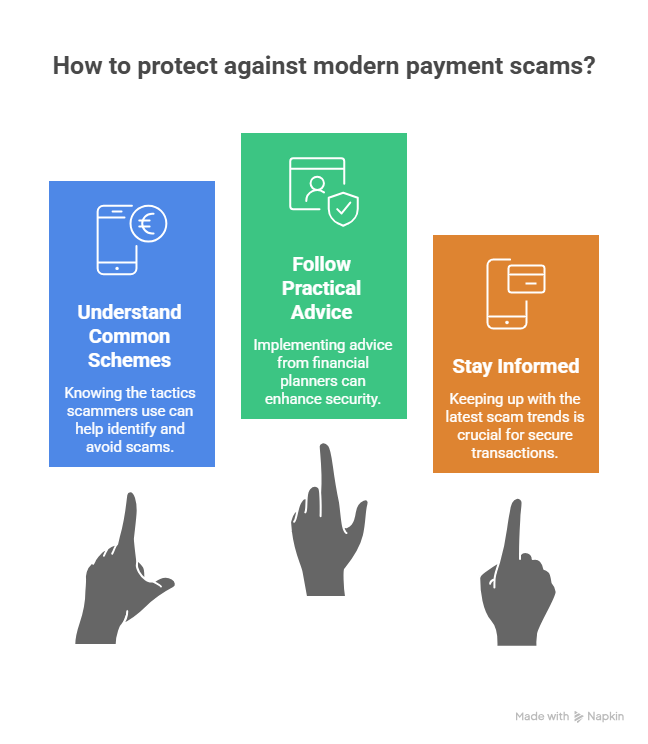
PROTECT THE TRANSFER
Payment App Scams: Zelle, Cash App & Venmo Safety Guide
Use this when money is moving through Zelle, Cash App or Venmo. Bank failure protection and payment-app fraud protection are different problems.
Read the guide →When you just need the answer, go straight to it.
The flagship stays strategic. These lower sections preserve the useful operational guides people arrive for from search.
Checks, deposits & routing
Transfers & payment apps
Chime
Newer banking guides and updates.
The strategic cash framework above stays stable. This section keeps recent operational updates discoverable.

Vanilla Gift Card ZIP Code & Registration: What to Enter in 2026
If a checkout page asks for a Vanilla Gift Card ZIP code, use your own ZIP code. If it asks for a billing address, use your own name and address. Vanilla’s current FAQ says there is no preset billing address and no need to register the Gift Card first. That answer sounds simple because the […]
 Dec 23, 2025
Chime Withdrawal Limits (2026): ATM, Daily & Cash Back Rules
Dec 23, 2025
Chime Withdrawal Limits (2026): ATM, Daily & Cash Back Rules
 Sep 9, 2025
Payment App Scams: Zelle, Cash App & Venmo Safety Guide
Sep 9, 2025
Payment App Scams: Zelle, Cash App & Venmo Safety Guide
 May 20, 2025
Chase Mobile Check Deposit 2026: Limits, Timing & How It Works
May 20, 2025
Chase Mobile Check Deposit 2026: Limits, Timing & How It Works
 May 20, 2025
Where Can I Load My Chime Card for Free? 2026 Locations
May 20, 2025
Where Can I Load My Chime Card for Free? 2026 Locations
 May 10, 2025
Bank Overdraft Fees: How They Work and How to Avoid Them
May 10, 2025
Bank Overdraft Fees: How They Work and How to Avoid Them
General financial education only. Cash-reserve size, account choice, tax treatment, deposit insurance and investment protection depend on account ownership, institution, product, timing and household circumstances.