

ESSENTIAL GUIDE
4% Rule for Retirement: How It Works & When to Adjust
The 4% rule is a retirement-withdrawal starting point, not a promise. The basic idea is simple: withdraw 4% of your portfolio in the first…
Read the guide →Retirement income is not one withdrawal rule. It is a system that coordinates reliable income, portfolio withdrawals, taxes, health care, market risk, and the life you actually want to fund.
The useful question is not “What is the magic withdrawal rate?” It is “What job must each dollar do, and when?”
A strong income plan gives essential spending a dependable floor, keeps flexible spending adaptable, and leaves room for future tax and health-care decisions.
Pick the question closest to the one in your head. You can move between paths later because these decisions overlap.
Start with an illustrative $4,000 monthly reliable-income floor. Move the spending target and watch the portfolio job change. The point is not to recommend a number. It is to show why spending, income, and withdrawals must be planned together.
Illustration: reliable income stays at $4,000 per month. Taxes, inflation, account balances, and investment returns are not modeled.
At a $7,000 target, the illustrative portfolio gap is $3,000 per month.
Teaching illustration only. A real retirement-income plan also asks which spending is essential, which income is inflation-adjusted, when benefits begin, which account supplies the next dollar, and how taxes and market results change the path.
Retirement readiness is not just an account balance. It is the relationship between the life you want to fund, the income that arrives without a portfolio sale, and the flexibility you have when markets or expenses surprise you.
The 4% rule is a retirement-withdrawal starting point, not a promise. The basic idea is simple: withdraw 4% of your portfolio in the first…
Read the guide →
How long your money will last in retirement depends mostly on how much you withdraw, how long retirement lasts, what your investments earn, inflation,…
Read the guide →
The best asset allocation for a retiree is not determined by age alone. It should reflect how much of your spending must come from…
Read the guide →A retirement paycheck is easier to manage when you separate the money that protects the floor from the money that keeps the future flexible.
Market losses, inflation, taxes, health-care costs, longevity, and account rules do not arrive one at a time. These are the guides that help you see the pressure points before they become urgent.
The page carries the core lesson in HTML. The channel is the optional human walkthrough when you would rather hear the decision explained.
Retirement income choices change as access rules, tax brackets, Medicare, and required distributions enter the picture. Use the age rail as orientation, then read the rule that matches your situation.
Early-retirement money may be available, but account type, contribution basis, exceptions, and penalty rules matter.
Read the access guide →The penalty hurdle changes, but taxes, sequence risk, and withdrawal order still shape the paycheck.
Compare distribution rules →Traditional retirement accounts generally enter required-distribution territory at 73. The rule is only the starting point; the tax decision follows.
Verify with the IRS →Retirement income touches the accounts that hold the money, the taxes that reach it, and the protections that keep the plan resilient.
Start with the curated guide above. Browse these newer articles when you want to follow the category's current conversation.



Social Security is part of the paycheck—not the entire plan.
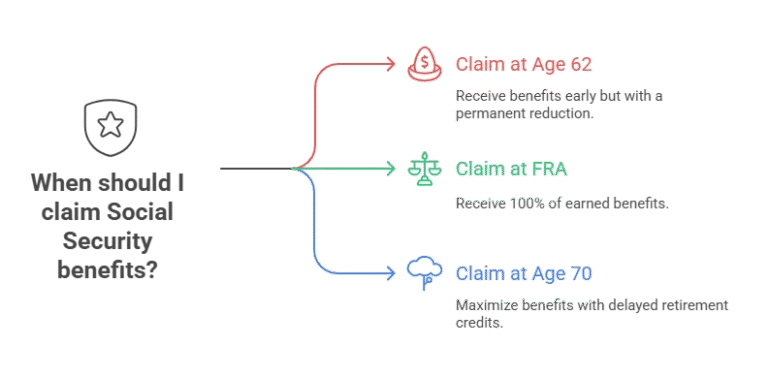
SSA says retirement benefits can generally begin at 62 and the monthly amount changes based on when you claim, up to age 70. The decision belongs inside the household's spending, health, survivor, tax, and portfolio conversation.
Earlier income may help cash flow, but the monthly benefit is reduced.
Compare 62, FRA, and 70 →Your birth year matters. So do work, taxes, health, and survivor needs.
Check SSA's age chart →Waiting longer can increase the monthly benefit, but it changes what funds the bridge years.
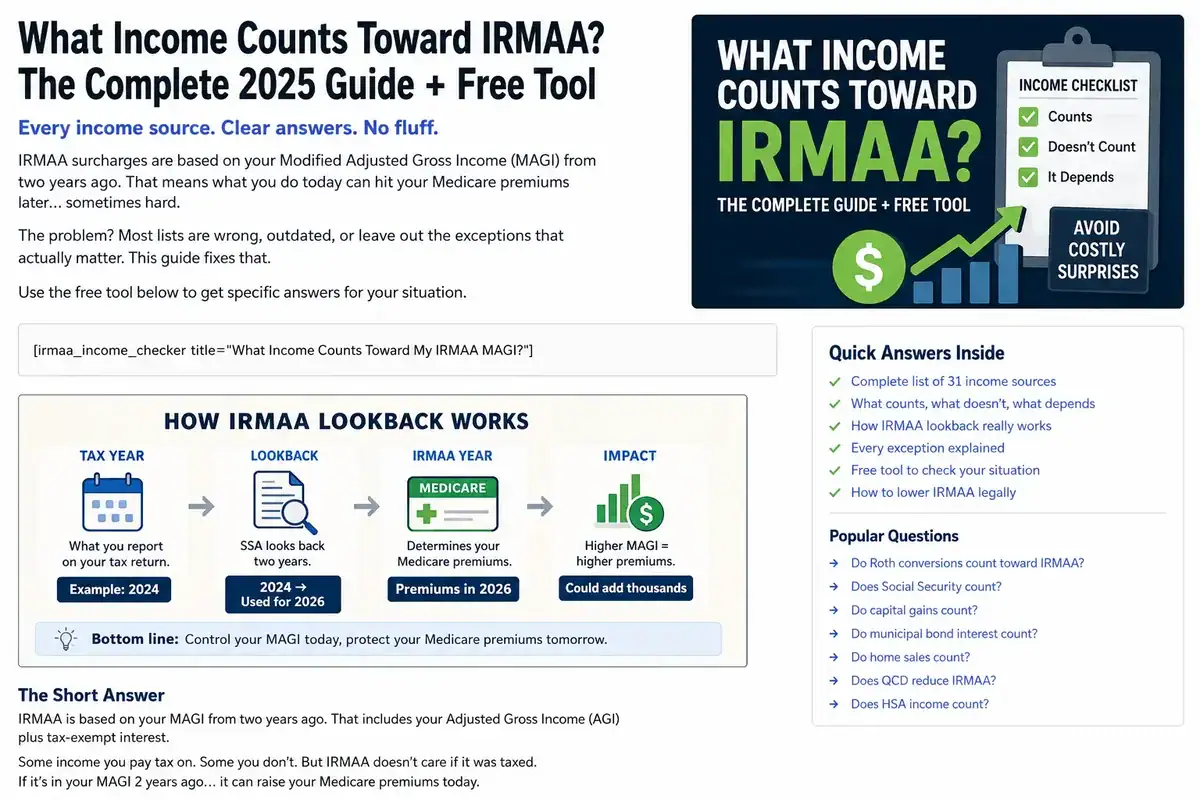
See the IRMAA trade-off →