
HEALTH INSURANCE & MEDICARE
Choose the coverage. Know the real cost. Don’t miss the handoff.
Health coverage gets expensive when the calendar, the network, or the income rules change before the plan does. Start with the transition you are actually facing.
BEFORE 65Employer · spouse · Marketplace · COBRAKeep coverage continuous and compare total annual cost.
THE HANDOFFMedicare timingPart B, HSA timing, Medigap rights and coverage architecture.
EVERY FALLReview the plan againANOC, drugs, providers, premiums and IRMAA.
Coverage is not “set it and forget it.” Retirement, age 65, income and annual plan changes can all change the right answer.
What changed?
The same household can move through all four of these paths within a few years. They are decision states, not permanent labels.
Premium is not the price of the plan.
First eliminate plans that fail your must-have doctors, hospitals, prescriptions or access rules. Then compare the surviving plans by annual premium plus the medical costs you are likely to pay.
Plan A$5,120$4,320 premiums + $800 expected covered care
Plan B$6,880$6,480 premiums + $400 expected covered care
With light use, the lower-premium plan wins this simplified example.
Plan A$6,820$4,320 premiums + $2,500 expected covered care
Plan B$7,880$6,480 premiums + $1,400 expected covered care
The premium gap narrows once you actually use the coverage.
Plan A$12,820$4,320 premiums + $8,500 illustrative in-network maximum
Plan B$10,980$6,480 premiums + $4,500 illustrative in-network maximum
In a very high-cost year, the higher-premium plan can become the cheaper risk-transfer choice.
Illustrative teaching example only. Real plans differ in networks, covered services, copays, coinsurance, deductibles, out-of-pocket limits, employer contributions and tax treatment. Out-of-network and noncovered care may not count toward the in-network maximum.

START HERE · 4-P METHOD
How to Choose a Health Insurance Plan (2027 Guide)
Use Plan Type, Providers, Pocketbook and Prescriptions to eliminate bad fits before you compare price.
Read the full plan-selection guide →The gap to 65 is a coverage problem and an income-planning problem.
If employer coverage ends before Medicare begins, compare the coverage route and the income consequences together.
Four decisions happen close together. They are not the same decision.
Use the walkthrough to see the order. The correct enrollment timing depends on your actual coverage and work situation.
WATCH THE HANDOFF
Confirm when Part B should start
If you are still working and covered by current employment, the Part B timing rules can differ from someone who is retiring at 65. COBRA is not current-employment coverage.

TURNING 65 · START HERE
Working Past 65? When to Enroll in Medicare Part B
Start here when you are still employed, covered by a spouse, or deciding whether Part B should begin now or later.
Read the Medicare enrollment guide →IRMAA can turn an income decision into a Medicare-premium decision two years later.
The tax year, filing status and Medicare MAGI determine the income-related step. For 2026 premiums, Social Security generally uses 2024 tax information.
2024Income happensAGI + tax-exempt interest for Medicare MAGI.
SSA LOOKBACKTax data travels forwardGenerally two years.
2026Medicare premium changesPart B and Part D may include IRMAA.
2026 · SINGLE FILER
$109,000
or less of 2024 Medicare MAGI: no IRMAA.
FIRST IRMAA STEP
$1,148.40/yr
Part B + Part D surcharge if both apply for all 12 months.
For 2026, the first single-filer IRMAA band begins above $109,000 of 2024 Medicare MAGI; the corresponding joint threshold is above $218,000. The first monthly adjustment is $81.20 for Part B plus $14.50 for Part D. Each covered spouse pays their own surcharge.
Three tools for the Medicare-premium questions that need a number or a route.
USE · CALCULATORIRMAA CalculatorEstimate 2026 Part B and Part D income-related surcharges from Medicare MAGI and filing status.Open calculator →
USE · INCOME CHECKERWhat counts toward IRMAA MAGI?Check common income items before you assume a tax or investment decision is invisible to Medicare.Check income →
USE · APPEAL ROUTEIs SSA-44 the right route?Start here after retirement, reduced work, divorce, a spouse’s death or another potential life-changing event.Check the appeal route →
The guides that answer the next question, not just the newest question.
Curated by decision. The automatic recent-updates feed comes later.

HSA + RETIREMENT
How to Use an HSA as a Retirement Account in 2026
For eligible households, the HSA can be both a current medical account and a long-term retirement asset.
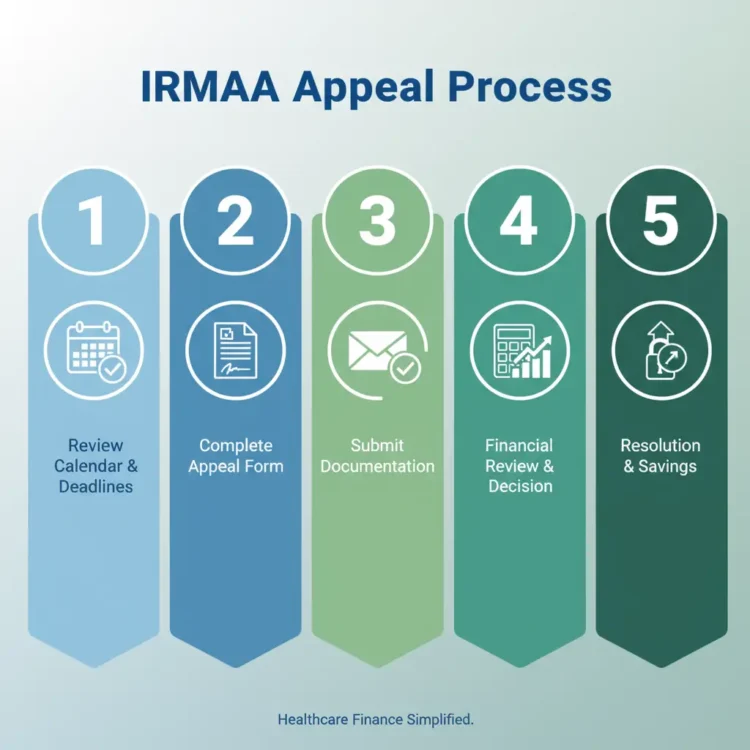
IRMAA APPEAL
How to Appeal Your 2026 IRMAA Medicare Surcharge: SSA-44 Form Guide
Use when the old tax return no longer reflects your income after a qualifying life-changing event.

2027 PLAN REVIEW
Medicare ANOC 2027: Check These 3 Things First Before You Toss It
The Annual Notice of Change is the first place to check what changed in cost, drugs, providers and benefits for next year.

HEALTH PLAN COST
How to Lower Health Insurance Premiums in 2027
Premium savings only help when the network, benefits and out-of-pocket exposure still fit the household.
CHECKED OCTOBER 1, 2026
What matters right now
A USEFUL NEXT STEP
Get Financial Clarity →
Want the health-cost decision connected to the rest of the retirement plan?
Financial Clarity connects Medicare, IRMAA, taxes, Roth conversions, retirement income and the coverage decisions that can change when one of those moves.
What changed most recently
This is the chronological layer. The curated guides above remain the durable starting points.
Oct 25, 2026
2026 IRMAA Brackets: Medicare Part B & Part D Costs
The 2026 IRMAA brackets start above $109,000 of modified adjusted gross income (MAGI) for most single filers and…
Oct 25, 2026
Does NUA Affect IRMAA? The Timing Trap Most Retirees Miss
I got an email recently with a very specific question: Does NUA affect IRMAA? Yes, it can. The…
Oct 25, 2026
2026 IRMAA Calculator: Medicare Part B & D Surcharge
Use this IRMAA calculator to see the staircase: enter your filing status and MAGI, then move the income…
Oct 25, 2026
How Medicare Calculates IRMAA: MAGI, Lookback & Surcharge
Medicare generally determines IRMAA by looking back two years to your federal tax information, taking the IRMAA MAGI…
Oct 25, 2026
Medicare Hold Harmless Rule: Why It Doesn’t Protect You From IRMAA
Can Medicare take more than your Social Security cost-of-living raise? For some retirees, the hold-harmless rule says no.…
Oct 25, 2026
Medicare HSA 6 Month Rule: When to Stop Contributions
If you are working past 65 and still contributing to a Health Savings Account, Medicare can reach backward…
Browse older Health Insurance & Medicare guides →