
If a qualifying life-changing event such as stopping work, reducing work hours, divorce, or the death of a spouse lowered the income Social Security used to set your Medicare IRMAA surcharge, you may request a new initial determination. Form SSA-44 is one way to make that request; it is not required for every IRMAA dispute.
If you are not sure whether your change qualifies, use the IRMAA life-changing-event eligibility tool before following the form instructions below.
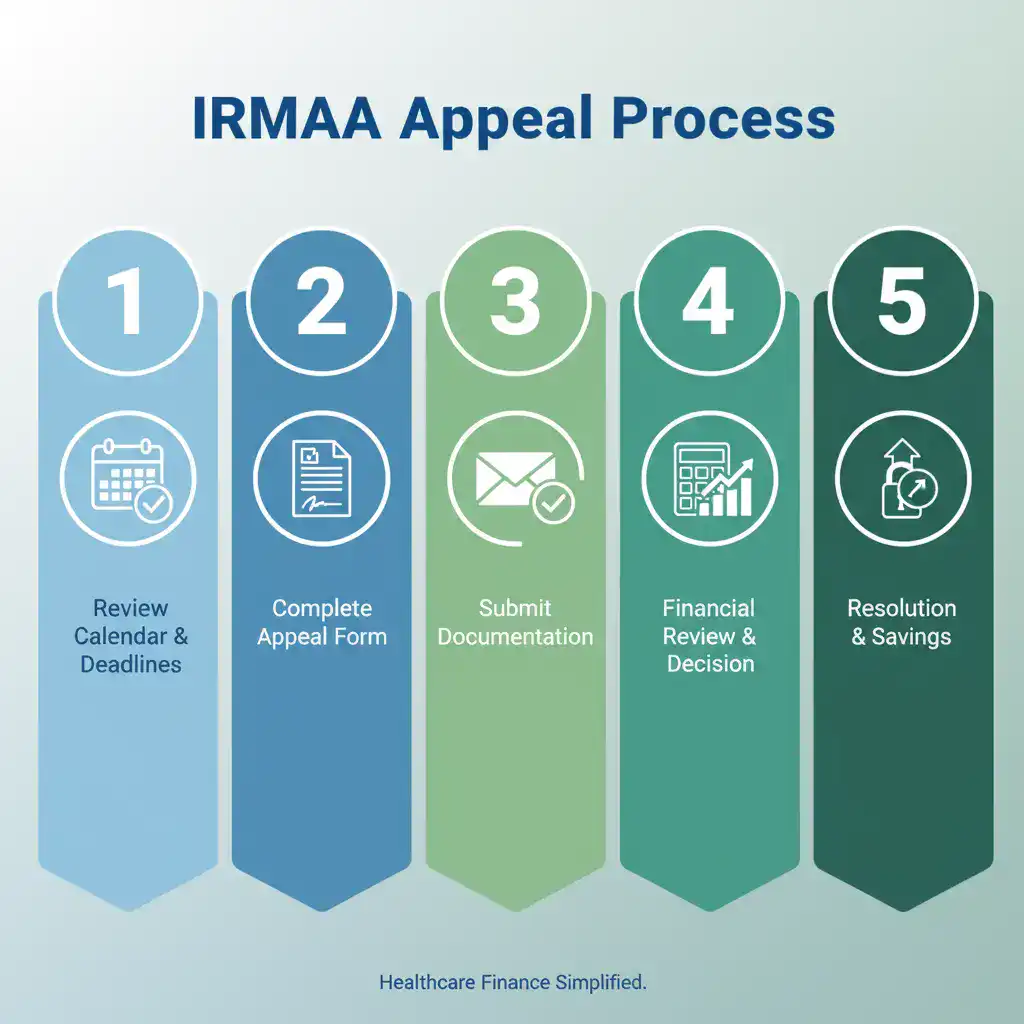
SSA generally sets Medicare Part B and Part D IRMAA using income from two tax years earlier. A qualifying life-changing event can allow SSA to use more recent information. Corrected or amended IRS data may follow a different new-determination route, while a formal disagreement with an IRMAA determination follows reconsideration and its appeal deadline.
After 30 years as a financial planner, one thing still stands out: a Medicare surcharge letter can land long after the income that triggered it has disappeared. That doesn’t mean the notice is wrong. It means you need to know which income year Social Security used and whether you qualify to change it.
Here’s the first question I’d ask: What exactly needs correcting—the income year, the tax information, or the original determination? Your answer tells you which request to make, what proof to attach, and which deadline matters.
Quick Answer: When to Use SSA-44
- Qualifying life-changing event: Ask SSA for a new initial determination based on more recent MAGI. SSA-44 is an optional way to report the event.
- Amended or corrected tax information: Ask SSA about the separate correction/new-determination route.
- Disagree with the original IRMAA determination: Check the notice and the formal reconsideration deadline, generally 60 days after receipt.
- Before you submit: Check your event date, filing status, income estimate, and supporting documents.
On This Page
- Key Takeaways Ahead
- Why IRMAA Can Use Income From Two Years Ago
- First, Check Whether Your Event Qualifies
- Could a Life-Changing Event Lower Your IRMAA?
- How to Complete Form SSA-44: The Five Steps
- What Evidence Do You Need for Form SSA-44?
- SSA-44 Steps 2 and 3: Which Income Year Goes Where?
- Submission and Deadlines: SSA-44 vs. Reconsideration
- What If SSA Does Not Approve the IRMAA Change?
- IRMAA Appeal Quick FAQ
- Before You Submit: Final SSA-44 Check
Key Takeaways Ahead
Why IRMAA Can Use Income From Two Years Ago
IRMAA is the income-related extra amount some Medicare beneficiaries pay for Part B and Part D. For 2026 premiums, SSA ordinarily uses the 2024 federal income tax return. If you retired during 2025, the number on that 2024 return may reflect employment income you no longer earn. That’s where a qualifying life-changing-event request can help. Not every income reduction qualifies, and a lower premium still depends on your more recent MAGI and filing status.
Want to see how much a particular MAGI amount changes the bill? Use my 2026 IRMAA brackets and premiums before you fill out the form.
First, Check Whether Your Event Qualifies
If your income fell after a qualifying life-changing event, Form SSA-44 can support a request for a new initial IRMAA determination. First identify the event and the tax year SSA used. A different issue, such as corrected IRS tax data or an amended return, may have a different correction route even without a life-changing event.
Which of the eight SSA-44 events happened to you?
The current SSA-44 lists marriage; divorce or annulment; death of a spouse; work stoppage; work reduction; loss of income-producing property; loss of pension income; and an employer settlement payment. Your income drop must relate to one of these events. A Roth conversion or ordinary home-sale gain is not a ninth event.
Check the event list on the official form before going further.

No qualifying life-changing event? Check the other IRMAA correction routes.
Don’t confuse a one-time transaction with a qualifying event.
A voluntary IRA withdrawal, Roth conversion, or home sale gain is not, by itself, one of the life-changing events listed on SSA-44. That does not eliminate ordinary reconsideration rights or other permitted requests for a new determination, such as corrected IRS information or an amended tax return. SSA explains those separate paths here.
How to Complete Form SSA-44: The Five Steps
You can use the current SSA-44 to organize the request. Work through its five steps in order; the income-year fields are where a simple mix-up can change the result.
Why SSA-44 Is Not a Formal IRMAA Appeal
For a qualifying life-changing event, SSA-44 supports a new initial determination, a different procedure from formally appealing an IRMAA determination. You can request a new initial determination verbally or in writing; this form is optional. An unfavorable response to SSA-44 does not automatically create a new reconsideration deadline. Check the actual notice and SSA appeal rights.
When to Contact SSA About Lowering IRMAA
Once a qualifying life-changing event has reduced your MAGI, or you have a reasonable estimate for the relevant premium year, contact SSA about lowering IRMAA. SSA timing rules depend on the requested premium year. Submitting early does not guarantee you will avoid a surcharge notice or receive a refund. Keep confirmation of what you submit and when.
What to Enter in SSA-44 Steps 1–5
The current SSA-44 (12-2025 edition) has five steps:
- Step 1 – Life-changing event: Choose the qualifying event and enter the month and year it occurred.
- Step 2 – Income reduction already occurred: Enter the more recent tax year, adjusted gross income, tax-exempt interest, and filing status for the reduced-income year.
- Step 3 – Expected further reduction next year: If MAGI will fall further the following year, provide those estimates. Otherwise follow the form instruction to skip to Step 4.
- Step 4 – Evidence: Supply proof of the event and more recent income as the form instructs.
- Step 5 – Signature: Sign and supply current contact information.
What Evidence Do You Need for Form SSA-44?
SSA needs evidence suited to your specific request: proof of the qualifying event where applicable, the relevant tax information or reasonable estimate, and any documents SSA asks for. Keep dates and amounts consistent. A complete, accurate packet reduces avoidable follow-up, but no set of documents guarantees approval.
Michael Ryan Money Tip: Match the evidence to the event.
Check the official SSA-44 instructions before sending proof. Depending on the event, SSA may request an original, a certified public record, employer/pay evidence, or a signed statement. A generic rule that every document must be certified is not accurate.
The 60-second document check
- Write down the exact qualifying event and month/year.
- Match your reduced-income tax year, AGI, tax-exempt interest and filing status.
- Attach the event and income proof SSA asks for in your situation.
- Keep a full copy and proof of your submission.
Keep the event date, requested income year, tax filing status, and documents consistent. SSA may request more evidence if the information does not match.
Already filed the more recent tax return? The SSA-44 instructions say to provide a signed copy of that return or an IRS transcript. If you used an estimate instead, SSA may require the signed return after you file it. Keep this follow-up obligation on your calendar; an estimate is not the end of the paperwork.
For more on the differences between death of a spouse and divorce, see my IRMAA appeal guidance for widowed and divorced retirees.
SSA-44 Steps 2 and 3: Which Income Year Goes Where?
Here’s the detail that trips people up: Step 2 is not automatically the old tax return SSA used to charge you. It is the more recent income reduction following the event. Step 3 is only for an additional reduction you expect next year. If you’re estimating income, use a defensible estimate and be ready to provide the actual return when SSA requests it. For the calculation, see what counts toward IRMAA MAGI.
Which year should you enter for 2026 premiums? If work stopped in 2025 and 2026 income will not be lower, Step 2 generally uses your 2025 MAGI. If the work stoppage or income reduction first occurs in 2026, or 2026 MAGI will be lower still, use the relevant 2026 estimate in Step 2. Step 3 is only for an additional expected reduction in the year after Step 2. These examples follow SSA-44’s Step 2 instructions; check the tax year printed on your SSA notice and contact SSA if your timeline is different.
- What is MAGI?
Modified Adjusted Gross Income (MAGI) is the income figure SSA uses to determine the surcharge bracket, together with filing status. It’s your Adjusted Gross Income (AGI) from IRS Form 1040, Line 11, plus any Tax-Exempt Interest from Line 2a. Tax-exempt interest is easy to overlook because it counts toward IRMAA MAGI even though it is not part of taxable federal income. - Step 2 vs. Step 3: Form SSA-44 asks for two different income years:
- Step 2 is the more recent actual or estimated income year following the event. For 2026 premiums, SSA ordinarily started with 2024 IRS data; that baseline is context, not the Step 2 field.
- Step 3 is the additional anticipated income reduction the following year, if applicable. If MAGI will not fall further, follow the form instruction to skip to Step 4.
Check the numbers before you submit. Your premium-year IRMAA bracket depends on filing status and MAGI; the calculator below can help you estimate the amount at stake.
2026 IRMAA MAGI Example: AGI Plus Tax-Exempt Interest
Here is a hypothetical 2026 premium-year example: a single Medicare beneficiary retired in 2025 and asks SSA to use more recent income rather than the 2024 tax information ordinarily used for 2026 IRMAA. Suppose the beneficiary estimates AGI of $75,000 and tax-exempt interest of $5,000 for the more recent tax year.
IRMAA MAGI in that example is $80,000 ($75,000 + $5,000), below the $109,000 2026 single-filer threshold. The event, income, and documentation must still meet SSA rules; this does not guarantee approval. If the person receives Social Security, the taxable portion is already included in AGI. Do not add the full Social Security benefit a second time.
Follow the number—not the label on the account. For IRMAA, start with AGI from Form 1040 line 11 and add tax-exempt interest from line 2a. Do not add the full amount of Social Security benefits again when their taxable portion is already in AGI. Then compare the total against the IRMAA calculator for the correct premium year and filing status.
Submission and Deadlines: SSA-44 vs. Reconsideration
These are different processes with different timing rules. A formal reconsideration of an IRMAA determination generally must be requested within 60 days after receiving the notice; SSA may extend that period for good cause. An SSA-44 new initial determination based on a qualifying life-changing event is not subject to that blanket 60-day appeal deadline. Its effective year and any request for an earlier premium year have separate SSA rules. Check SSA’s life-changing-event timing rules before filing.
Filing and Follow-Up Timeline
Use SSA’s Request to lower IRMAA page for the latest SSA-44 submission options, including:
- Online: Sign in through SSA’s official request page to complete and submit SSA-44. Save any confirmation that is provided.
- Fax, mail, or appointment: Follow SSA’s official instructions to fax or mail the completed form with evidence, or arrange an appointment. Keep available fax, mailing, or appointment confirmation records.
What If SSA Does Not Approve the IRMAA Change?
Ask SSA what action it took and read the written notice. If SSA denies or dismisses an SSA-44 new initial determination request, that is not automatically the same as a reconsideration decision with a fresh 60-day window. If you dispute the actual IRMAA determination, ask about reconsideration (Form SSA-561) and follow the appeal rights and deadline stated in that determination notice. If the issue is corrected or amended tax data, ask about the separate new-determination route. SSA’s IRMAA appeals guidance explains the distinction.
- Reconsideration (first formal appeal level): Another SSA reviewer examines the determination and supporting evidence. The usual deadline is 60 days after receipt of the appealable IRMAA notice, with possible good-cause extensions.
- ALJ hearing (second formal appeal level): If reconsideration is unfavorable, follow the notice instructions to request a Department of Health and Human Services administrative-law-judge hearing.
If the immediate correction or formal appeal does not resolve the current surcharge, plan for future premium years using the usual income lookback. Do not mistake longer-term tax planning for an SSA-44 eligibility rule:
- Plan future MAGI carefully: A qualified charitable distribution may keep an otherwise taxable IRA distribution out of AGI if the donor is eligible. A taxable Roth conversion generally raises AGI in the conversion year and could increase IRMAA in the corresponding later premium year, although it may reduce taxable withdrawals in future years. Neither strategy guarantees avoiding IRMAA.
IRMAA Appeal Quick FAQ
Does selling a home qualify as an SSA-44 life-changing event?
A home sale or one-time capital gain does not, by itself, qualify as an SSA-44 life-changing event. If SSA used incorrect tax data, you may have a separate correction route; a formal reconsideration is also a different process with its own appeal rights. Selling property does not automatically establish that SSA made an error.
u003cstrongu003eWhat if I miss the 60-day deadline?u003c/strongu003e
The 60-day period generally applies to formal reconsideration of an appealable IRMAA determination. SSA may allow late filing for good cause. An SSA-44 request based on a qualifying life-changing event has different timing rules. Corrected or amended IRS data may support another new-determination route. Read the actual notice and ask SSA which path fits.
u003cstrongu003eWhat if I appeal after a big Roth conversion?u003c/strongu003e
A Roth conversion alone is not a qualifying life-changing event. Its taxable portion generally increases AGI. A separate qualifying event such as work stoppage may support a new determination if more recent MAGI and other requirements fit; the conversion does not itself become an eligible event.
Where to go next
- Still waiting on a decision? See the IRMAA appeal process and follow-up guide.
- Need the dollar amount? Check the 2026 Medicare IRMAA brackets.
- Planning for later years? Learn how retirement-income decisions affect future IRMAA.
Before You Submit: Final SSA-44 Check
Before submitting, check the qualifying event, tax year, MAGI figures, and proof. SSA looks at whether your information satisfies its rules, not how convincingly you describe your frustration. Keep a copy of your request and be prepared to provide more evidence if needed.
A planning lesson worth remembering: the right facts on the wrong form can still send you in circles. Keep the SSA letter, event documentation, income estimate, and submission record together so you can respond quickly if SSA has questions.
Ready to act? Start with SSA’s lower-IRMAA request page and use the form or process that fits your case. To catch Medicare timing mistakes before they become expensive, get my free Financial Clarity newsletter. I’ll help you understand the next decision—not ask you to subscribe to finish this one.

Share this guide with a friend turning 65!
