
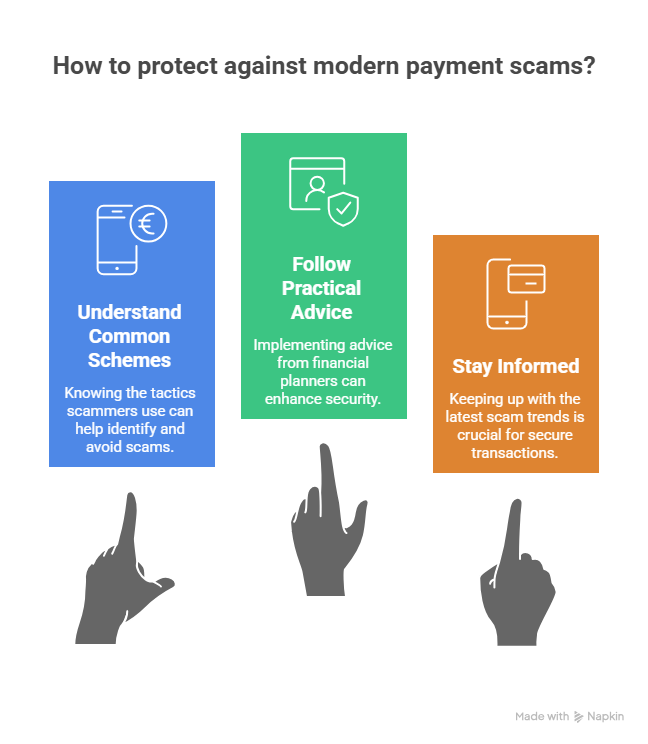
If you are dealing with payment app scams involving Zelle, Cash App, or Venmo, do not start with “Is the money gone?” Start with “What exactly happened?”
The recovery path changes depending on whether you sent the payment yourself, someone else got into your account and sent it, or unexpected money showed up in your account.
That distinction matters because payment-app scams are not all treated the same. An unauthorized transfer can carry federal error-resolution protections. A payment you personally approved after a scammer deceived you can be harder to recover, although some network or app policies provide additional reimbursement in specific situations.
And if a stranger sent you money, sending a brand-new payment back can create a second problem.
Some search results use APP fraud to mean authorized push payment fraud, a broader payments-industry term. This guide uses payment app scams in the everyday U.S. consumer sense: scams involving services such as Zelle, Cash App, and Venmo.
Zelle, Cash App, and Venmo are mobile payment apps or P2P payment services used for sending and receiving money. A payment app scam usually does not require a fake app at all. The fraudster uses a legitimate payment service plus impersonation, phishing, a fake “suspicious activity” alert, or another story to persuade you to move money. The speed of real-time payments is convenient, but it also leaves less time to catch a mistake before the money moves.
Stop creating new transactions. Do not send a “refund,” a verification payment, a fee to unlock money, or another transfer to “protect” your account. Report what happened through the payment app and your bank or credit union using contact information you know is real. If you exposed a password, PIN, verification code, or an unlocked phone, secure those accounts immediately.
In nearly three decades around household financial decisions, one pattern matters here: panic creates second mistakes. Someone loses money, feels pressure to fix it immediately, and makes another payment before anyone has verified what happened. The first goal is not to solve the entire scam in five minutes. It is to stop the next transaction.
In this guide
On This Page
- How Payment App Scams Work: 3 Situations That Change Your Next Step
- What to Do If You’ve Been Scammed on a Payment App
- What to Do If a Stranger Sent You Money
- Zelle vs. Cash App vs. Venmo: Refund and Protection Differences
- How Payment App Scams Work: The Patterns That Keep Repeating
- How to Avoid Payment App Scams Before You Tap Send
- Payment-App Scam FAQ
- The Bottom Line on Zelle, Cash App, and Venmo Scams
- How We Verified This
How Payment App Scams Work: 3 Situations That Change Your Next Step
The old advice that “payment apps are digital cash, so once it is sent it is gone forever” is memorable, but it is too blunt. Zelle, Cash App, Venmo, banks, and federal rules distinguish between different kinds of transactions. Before arguing about a refund, classify the event.
Which one happened to you?
1. You pressed Send
A scammer persuaded you to make the payment yourself. Report it immediately, but reimbursement depends on the facts and the provider’s rules. Zelle says certain qualifying imposter scams may be eligible for reimbursement.
2. Someone else sent it
A fraudster accessed your account, phone, or credentials and initiated a transfer you did not authorize. This may be an unauthorized electronic fund transfer under Regulation E, which can trigger federal error-resolution and liability protections.
3. Money showed up
A stranger sent money to you and now wants it back. Do not create a new payment to “return” it. Use the bank or app’s official process for the original transaction.
The Consumer Financial Protection Bureau’s Regulation E guidance says qualifying P2P transfers are electronic fund transfers and explains that transfers initiated by a fraudster using stolen or fraudulently obtained account access information can be unauthorized EFTs. That is very different from saying every scam-induced payment is automatically an “authorized transaction” with no consumer rights.
Do not argue with the bank using the word “scam” alone. Describe what actually happened. “I made this payment after someone lied to me” and “I did not initiate this payment” are different facts. The facts drive the investigation.
What to Do If You’ve Been Scammed on a Payment App
Act quickly, but do not let speed turn into more panic. The FTC says it is always worth asking the company or financial institution you used to send the money whether the payment can be reversed or refunded.
- Stop communicating and stop sending money. A scammer who already got one payment may ask for a fee, tax, verification payment, or “recovery” payment next.
- Report the transaction inside the app and to the linked bank or credit union. Tell them whether you initiated the transfer or whether someone else did.
- Secure anything the scammer may have touched. Change compromised passwords, turn on multi-factor authentication or an app security lock, and review linked cards and bank accounts.
- Save the evidence. Keep screenshots, transaction IDs, usernames, phone numbers, email addresses, URLs, dates, and the exact messages that led to the payment.
- Report the scam. File with the FTC at ReportFraud.ftc.gov. If the scam involved account takeover or stolen identity information, use IdentityTheft.gov. For internet-enabled crime, you can also file with the FBI Internet Crime Complaint Center.
If someone got your Social Security number, bank credentials, or other identity information, move into identity-theft mode rather than treating this as only a payment-app problem. My guide to identity theft warning signs and prevention covers that broader layer.
FTC data for 2025 show consumers reported about $16 billion in fraud losses, including $3.5 billion in imposter-scam losses. Some of the costliest impersonation scams begin with a fake bank-security alert and convince people to move money to “protect” it. The scam changes costumes. The pressure to act before verifying does not.
What to Do If a Stranger Sent You Money
This is where good instincts can create a bad transaction. Someone sends you $300, $700, or $1,200 “by mistake.” Then comes the frantic message: wrong number, rent money, wedding deposit, medical bill, please send it back right now.
Do not send a brand-new payment back. The safe process depends on the app, but the common rule is to work through the original transaction or official support rather than creating a second independent transfer.
The emotional hook is not greed. It is decency. You think, “That is not my money. I should fix this.” That is exactly why this scam works. You can still do the right thing without becoming the payment processor. Leave the funds alone, use the app or bank’s official support process, and let them handle the original transaction.
For Venmo, Venmo explicitly says to contact Support if you receive a payment from a stranger and not to pay the stranger back on your own. Cash App’s current scam guidance similarly warns against sending a new payment back and says that if money truly needs to be returned, use the refund function on the original transaction. With Zelle, payment-related issues are handled through the participating bank or credit union, so contact your financial institution and do not improvise a second Zelle payment.
Treat an unexplained incoming payment as unresolved until the app or financial institution tells you what happened. Moving or spending it does not make the underlying issue disappear.
Zelle vs. Cash App vs. Venmo: Refund and Protection Differences
These services all move money quickly, but their consumer-protection rules are not interchangeable. Here is the part worth knowing before a problem happens.
Where to start after a problem
Zelle
Completed payment: A payment to an enrolled recipient generally cannot be canceled or reversed.
Unauthorized fraud: Report it to your bank or credit union. Zelle says unauthorized payments typically qualify for reimbursement.
You were tricked into sending: Report it anyway. Zelle says certain qualifying imposter scams may be eligible for reimbursement.
Cash App
Report: Use the transaction in your Activity feed and report the issue, or contact official Cash App Support.
Unauthorized transfer: Cash App says it investigates unauthorized-transfer claims and reimburses eligible claims under its dispute rules.
Security: Security Lock can require your face, fingerprint, or PIN before a payment.
Venmo
Completed personal payment: Venmo says there generally is no way to cancel it once sent.
Paid a scammer: Contact Venmo Support and report the issue.
Buying from a stranger: Eligible purchases may have Purchase Protection when you use an approved business account or correctly mark an eligible payment as a purchase.
Zelle’s current scam-reporting guidance now makes a distinction the old version of this article missed: confirmed unauthorized fraud and certain qualifying imposter scams are not treated the same as ordinary authorized purchase disputes. Zelle also says the bank or credit union is the first contact when you use Zelle through your financial institution.
Is your Zelle payment simply pending, rather than suspicious? A delayed transfer is not proof of fraud. Check the status in your bank or Zelle app and use the Zelle payment timing guide for ordinary enrollment and transfer-status questions. But if you did not authorize a transfer, sent money to an imposter, or shared a security code, report the incident to your bank or provider immediately; do not wait for a pending status to clear. CFPB guidance explains the different treatment of unauthorized electronic transfers.
If you are paying a stranger for merchandise, this is also where the payment method matters. Zelle says it does not offer a purchase-protection program for authorized Zelle payments. Venmo can provide Purchase Protection for eligible transactions when its requirements are met. Credit cards can have a different dispute framework again. My guide to credit card scams and fraud covers that separate system.
How Payment App Scams Work: The Patterns That Keep Repeating
You do not need to memorize 37 scam names. You need to recognize the mechanism. Current FTC data show imposter scams remain the most frequently reported fraud category, and Cash App’s current safety guidance describes three recurring levers: urgency, authority, and isolation.
Bank impersonation and the “move your money to protect it” scam
A caller or text appears to come from your bank. There is supposedly suspicious activity, and the solution is to move money through Zelle, Cash App, Venmo, crypto, or another account “for safekeeping.” The FTC specifically warns that some of the costliest impersonation scams begin with a fake security alert and persuade the victim to move money to protect it.
Do not verify a financial emergency through the same call, text, email, or DM that created it. Hang up or close the message. Open the bank or payment app yourself, or call the number on your card or official website.
The accidental-payment or fake-refund scam
You receive money, then an urgent request to send it back. Sometimes the story is completely fabricated. Sometimes the original payment may involve a compromised account or stolen payment method. The mistake is turning an unresolved incoming transaction into a new outgoing transaction of your own.
Fake support and verification-code scams
A scammer pretends to be the app or your bank and asks for a sign-in code, PIN, password, or remote access. Another version sends you to a fake payment-app login page that exists only to steal your username and password. Venmo says its agents will never ask for the verification code sent to your phone. Cash App says it will never ask for your sign-in code or PIN. A code that proves you are you should never become something you read back to an inbound caller.
Marketplace, ticket, and deposit scams
The seller wants to leave the marketplace checkout system and get paid directly. The reason may sound harmless: avoid a fee, hold the item, prove you are serious, reserve the apartment, secure the ticket. What changes is not just the payment rail. You may also be stepping outside the marketplace’s buyer-protection process.
Friend, family, or account impersonation
A familiar name or profile requests money for an emergency. The account may be cloned or compromised. Before paying, verify outside the app using a phone number or contact method you already know. The five-second text “Is this really you?” sent through the same compromised account is not independent verification.
How to Avoid Payment App Scams Before You Tap Send
- Use payment apps primarily with people you know and trust. If you are buying from a stranger, use a payment method and checkout path with protection designed for that purchase.
- Verify money requests outside the channel that delivered them. Call the person or institution using contact information you already trust.
- Never read a one-time verification code to someone who contacted you.
- Turn on the app’s available security controls. Cash App, for example, offers Security Lock using face, fingerprint, or PIN. Use multi-factor authentication where available.
- Keep an unlocked phone in your hand. If a stranger needs to make a call, dial it yourself and use speakerphone if practical. Do not hand over an unlocked device with banking or payment apps one tap away.
- Review privacy settings. Venmo specifically lets users limit the visibility of transaction history and friends lists, which can reduce information an impersonator can use.
- Slow down when someone creates a deadline. A legitimate problem can survive five minutes of independent verification.
Urgency is information. When someone tells you that your money, account, freedom, prize, ticket, job, or relationship depends on moving money in the next few minutes, the pressure itself is a reason to stop.
Payment-App Scam FAQ
Can you get your money back after a payment app scam?
Sometimes, but there is no one refund rule for every payment app scam. The answer depends on whether you initiated the payment, whether someone else made an unauthorized transfer, the app or network involved, and whether a separate protection program applies. Report the transaction immediately and describe exactly what happened rather than assuming the money is either guaranteed to return or automatically gone.
Will my bank refund money if I was scammed on Zelle?
It depends on what happened. If someone else gained access and made an unauthorized Zelle payment, report it immediately to your bank or credit union; Zelle says unauthorized transactions typically qualify for reimbursement. If you personally sent the money after an imposter deceived you, do not assume the answer is automatically no. Zelle says certain qualifying imposter scams may also be eligible for reimbursement. Your bank or credit union is the place to start the claim.
Can you be scammed on Cash App just by receiving money?
An unexpected incoming payment can be part of a scam, but the danger is usually what happens next. The sender may pressure you to create a new payment to “return” the money. Cash App advises against sending a separate payment back and says that if money truly needs to be returned, use the refund function tied to the original transaction.
What should I do if a stranger sends me money on Venmo?
Do not send a new payment back. Venmo says to contact Support as soon as possible so it can help reverse the payment, and it recommends blocking users who send unsolicited payments or requests.
Can a completed Zelle payment be canceled or reversed?
Zelle says a payment to an already enrolled recipient generally cannot be canceled or reversed through the normal payment flow. A payment to someone who has not yet enrolled can be canceled while it remains pending. Fraud or scam claims are a separate issue, so if the payment is disputed or suspicious, contact the participating bank or credit union.
Can someone hack my Cash App just because they know my phone number or $Cashtag?
Knowing a phone number or $Cashtag by itself is not the same as having account access. The bigger danger is being tricked into sharing a sign-in code, PIN, password, or access to your phone. Cash App says it will not ask you for your sign-in code or PIN through an unsolicited call, text, or email.
Is Venmo safer than Zelle for paying a stranger?
For a purchase from a stranger, the more useful question is whether the transaction has purchase protection. Zelle says it does not offer a purchase-protection program for authorized Zelle payments. Venmo can cover eligible purchases when you use an approved business account or mark an eligible payment as a purchase. Always check the current terms before paying.
The Bottom Line on Zelle, Cash App, and Venmo Scams
Payment-app scams move fast because the scammer wants your decision to move faster than your verification. Your defense is not memorizing every new script. It is recognizing what happened and refusing to create the next transaction until you have checked it through a trusted channel.
If you remember only three things, remember these: do not send an unexpected payment back as a new transfer, distinguish a payment you made from one you did not authorize, and report the problem immediately through the app and your financial institution.
How We Verified This
Payment-app policies and federal consumer-protection guidance were checked on September 23, 2026.
