
Lifestyle creep, also called lifestyle inflation, happens when higher income quietly turns into higher ongoing spending, so your savings and financial flexibility do not improve as much as your paycheck does. The fix is not to freeze your lifestyle forever. It is to decide what new income is for before new expenses decide for you.
My default starting point is what I call the First Slice Rule: take the net increase from a raise or bonus and direct 50% toward your future, 30% toward a specific goal, and no more than 20% toward lifestyle upgrades. It is a decision rule, not a universal law. If you have high-interest debt, a thin emergency fund, or another urgent priority, your first slice should go there first.
A raise should raise your options before it raises your overhead.
On This Page
- What Is Lifestyle Creep?
- How to Tell If Lifestyle Creep Is Happening
- The Real Risk Is the Fixed-Cost Ratchet
- The First Slice Rule: A 50/30/20 Plan for Your Next Raise
- How to Stop Lifestyle Creep Without Feeling Deprived
- When Lifestyle Upgrades Are Actually Worth It
- Put the Raise to Work
- The Bottom Line on Lifestyle Creep
- Lifestyle Creep Frequently Asked Questions
- How We Verified This
What Is Lifestyle Creep?
Lifestyle creep is the gradual increase in spending that often follows an increase in income. A nicer apartment, more takeout, upgraded subscriptions, a newer car, better travel, and convenience purchases can each be reasonable on their own. The problem starts when several upgrades become your new minimum standard and the extra income disappears without improving your savings rate, debt position, or financial cushion.
Fidelity describes lifestyle creep as spending expanding with income while savings fall by the wayside. That distinction matters. Spending more because you intentionally chose a better life is not automatically a financial mistake. Spending more by default, then wondering where the raise went, is the warning sign.

How to Tell If Lifestyle Creep Is Happening
You do not need a complicated budget audit to spot it. Start with one question: What improved after my last raise besides my spending?
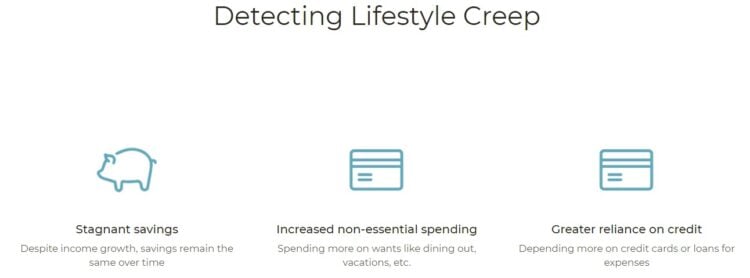
- Your savings rate stayed flat. You earn more, but the percentage or dollar amount you save barely moved.
- Your fixed monthly costs jumped. Housing, car payments, subscriptions, memberships, insurance, or other recurring commitments absorbed the raise.
- Old luxuries became the baseline. Things that once felt optional now feel normal or necessary.
- Your financial cushion did not grow. A raise came in, but your emergency savings, debt balance, or investing progress looks almost the same.
- You cannot explain where the extra money went. There was no deliberate choice. The money simply found new places to disappear.
That last one is the giveaway I would pay the most attention to. In financial planning, I saw how ordinary upgrades could quietly become recurring obligations.
The Real Risk Is the Fixed-Cost Ratchet
Not every extra dollar of spending creates the same problem. A nicer dinner is easy to stop buying next month. A larger mortgage, a 72-month car payment, three new subscriptions, and a more expensive school or club membership can reset your monthly baseline for years.
Your raise can disappear without you ever feeling richer.
You just got an extra $1,000 a month. Tap the upgrades that sound harmless. Watch what happens to the part of the raise that stays yours.
Right now, the whole raise is still flexible. That is the moment lifestyle creep has not happened yet.
The dangerous part is the floor. Once recurring costs rise, the next raise has to clear that higher floor before you feel richer again.
This is why I would watch fixed costs more closely than an occasional splurge. A recurring upgrade is a promise your future paycheck has to keep. Stack enough of those promises and a higher salary can feel surprisingly tight.
Social comparison can make that ratchet worse because you see someone else's car, house, vacation, or clothes but not the balance sheet behind them. If that is the trigger, my guide to keeping up with the Joneses tackles that problem directly.
The First Slice Rule: A 50/30/20 Plan for Your Next Raise
The easiest time to protect a raise is before your lifestyle adjusts to it. Behavioral economists Richard Thaler and Shlomo Benartzi tested a related idea in their Save More Tomorrow program: workers committed in advance to direct part of future pay increases toward retirement saving. The exact First Slice percentages below are my practical framework, not a research-backed optimum.
Split the net increase, not your whole paycheck
High-interest debt, emergency reserves, retirement accounts, or long-term investing, based on what your plan needs first.
A down payment, travel fund, vehicle replacement, home project, education goal, or another named priority.
An intentional upgrade you will actually notice and value, without letting the entire raise become new overhead.
Use this as a starting point. A weak emergency fund or expensive debt may justify putting far more than 50% toward financial repair.
Example: A $600 Monthly Take-Home Raise
- $300 a month to your future.
- $180 a month to a named savings goal.
- Up to $120 a month for an upgrade you choose on purpose.
Over a year, that is $3,600 directed toward your future, $2,160 toward a goal, and up to $1,440 of intentional lifestyle improvement. You still get to enjoy the raise. You just do not let all $7,200 quietly become permanent spending.
If you just received a raise and want the broader order of operations, use my pay-raise allocation guide. That page owns the immediate “what should I do with this raise?” decision. This page is about preventing the higher spending baseline that can follow.
How to Stop Lifestyle Creep Without Feeling Deprived
The goal is not to turn every purchase into a morality test. The goal is to create enough friction around automatic upgrading that you keep the things you value and skip the ones that merely raise your monthly floor.
1. Automate the Increase Before You Get Used to It
Once you know what the raise changes in your actual take-home pay, increase the automatic transfer or payroll contribution immediately. Automation works because the money has a job before checking-account gravity gets to it.
2. Check Fixed Costs Before Upgrading Them
Before taking on a bigger recurring bill, ask what happens if your income falls back, a bonus disappears, or another goal becomes more important. The upgrade may still be worth it. The point is to see the commitment before you make it.
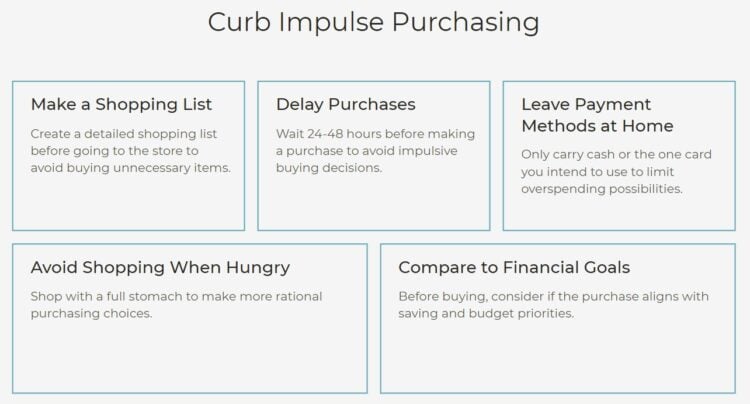
3. Give Bigger Upgrades a Waiting Period
Use a waiting period that is long enough to break the impulse. That might be 72 hours for a discretionary purchase or a few weeks for a new recurring expense. If you still want it after the excitement of the raise has faded, it is more likely to be a real preference than a reflex.
4. Choose One Upgrade on Purpose
Trying to avoid every lifestyle improvement can backfire. Pick the one change that would most improve your actual life. Maybe it is a safer apartment, a cleaner twice a month, better food, a gym you will use, or a trip you have wanted for years. One meaningful upgrade usually beats five forgettable ones.
5. Audit Your Baseline Once a Year
Review the recurring expenses that did not exist a year ago. Do you still value them? Would you sign up again today? If the answer is no, cancel or downgrade them and redirect the freed-up money before it disappears somewhere else.
When Lifestyle Upgrades Are Actually Worth It
This is the part most lifestyle-creep advice gets wrong. Spending more is not the enemy. A higher income is supposed to improve your life. The useful distinction is between an intentional upgrade and an automatic one.
Would I still choose this upgrade if nobody else could see it? If the answer is yes, and your important goals are still funded, you may be buying genuine quality of life rather than status or habit.
That question shows up repeatedly in real-world money discussions too. People are not only asking how to spend less. They are asking where the line is between lifestyle creep and finally enjoying the income they worked to earn. The answer is not a magic spending percentage. It is whether the upgrade is deliberate, affordable, and worth the tradeoff.
The Bottom Line on Lifestyle Creep
You do not beat lifestyle creep by promising to live like your old salary forever. You beat it by making sure each income increase improves your financial position and your life.
Protect the first slice. Be suspicious of recurring upgrades that permanently raise your floor. Spend the rest on things you will actually notice. If your income rises and your options rise with it, the raise did its job.
The problem is not that your lifestyle gets better. The problem is when your lifestyle gets more expensive faster than your financial life gets stronger.
Lifestyle Creep Frequently Asked Questions
What does lifestyle creep mean?
Lifestyle creep means your spending gradually rises as your income rises, often without a deliberate decision. It becomes a problem when higher earnings do not produce stronger savings, lower debt, or more financial flexibility.
Is lifestyle creep the same as lifestyle inflation?
Yes. The terms are commonly used to describe the same pattern: a higher income is followed by a higher spending baseline. Lifestyle creep emphasizes how gradually and quietly that change can happen.
Is all lifestyle creep bad?
No. Intentional lifestyle upgrades can be a good use of higher income when important goals are still funded and you value the tradeoff. The risk is automatic or recurring spending that absorbs income without meaningfully improving your life.
How much of a raise should I save?
There is no universal percentage. My First Slice Rule uses 50% of the net raise for your future, 30% for a specific goal, and up to 20% for lifestyle upgrades as a starting point. High-interest debt or a weak emergency fund may justify saving or paying down much more.
What is the best way to prevent lifestyle creep?
Decide where the extra income will go before it reaches your normal spending. Automating the saving or debt-payment portion of a raise is one of the simplest ways to keep new income from quietly becoming new expenses.
How We Verified This
These are the authorities and references used to verify the material facts in this article.
