
Most budgets do not fail because you bought coffee. They fail because the plan was built on the wrong numbers, forgot expenses that do not happen every month, became too restrictive to live with, or never changed when your life changed.
That is the useful way to think about common budgeting mistakes. Do not ask, “Why can’t I stick to a budget?” as if the problem is automatically discipline. Ask, “What kind of failure is this?” Once you diagnose the failure, the fix is usually much smaller than starting over.
Michael’s Take
After decades in financial planning, the pattern I kept seeing was not “people are bad at budgets.” It was that a technically neat budget could still be built for a life that did not actually exist. The spreadsheet was often fine. The assumptions were the problem.
On This Page
- A Quick Budget Diagnosis Before You Change Anything
- Budgeting Mistake #1: Guessing Instead of Measuring
- Budgeting Mistake #2: Ignoring Non-Monthly Expenses
- Budgeting Mistake #3: Making the Budget Too Strict
- Budgeting Mistake #4: Ignoring Cash-Flow Timing
- Budgeting Mistake #5: Letting a Raise Expand Your Fixed Costs
- Budgeting Mistake #6: Treating a Budget Rule Like a Law
- Budgeting Mistake #7: Budgeting Alone for Shared Money
- How to Fix a Budget That Keeps Failing
- What to Do Next
- Common Budgeting Mistakes FAQ
- Sources
A Quick Budget Diagnosis Before You Change Anything
If your budget keeps breaking, look at the symptom first:
- The numbers look fine on paper, but reality is always higher. You probably have a measurement problem.
- One car repair, insurance bill, holiday, or annual renewal wrecks the month. You probably have a calendar problem.
- One unplanned dinner makes you feel like the whole plan failed. You probably have a flexibility problem.
- You have enough income for the month, but not enough money on the day a bill is due. You probably have a cash-flow timing problem.
- You earn more than you used to, but you do not feel further ahead. You may have a lifestyle-creep problem.
- A popular budgeting percentage says you are “wrong” even when your plan is workable. You may have a method-fit problem.
- Your household budget looks reasonable, but two people keep making different money decisions. You have a coordination problem.
That distinction matters because each problem has a different fix. If you need to build a budget from scratch, use my step-by-step spending plan guide. This page is for diagnosing the mistakes that make an existing budget unreliable.
Budgeting Mistake #1: Guessing Instead of Measuring
A budget built from what you think you should spend is not really a budget yet. It is a first draft.
This is one of the easiest mistakes to miss because the numbers can look responsible. Groceries get rounded down. Gas gets estimated from memory. Restaurant spending gets based on a good month. A few subscriptions disappear completely. Then actual spending shows up and the budget appears to be the problem.
The Consumer Financial Protection Bureau specifically recommends looking back over several months so you do not miss less frequent expenses, and warns against editing your spending to what you think you “could” or “should” be spending. That is a much better starting point: use real history first, then decide what to change.
The fix: Pull two or three months of bank and credit-card activity. Use your actual spending as the baseline. Then change one or two categories deliberately. If you want a clean place to do that, use the free budget worksheet and calculator.
Budgeting Mistake #2: Ignoring Non-Monthly Expenses
This is the classic “my budget was working until…” problem.
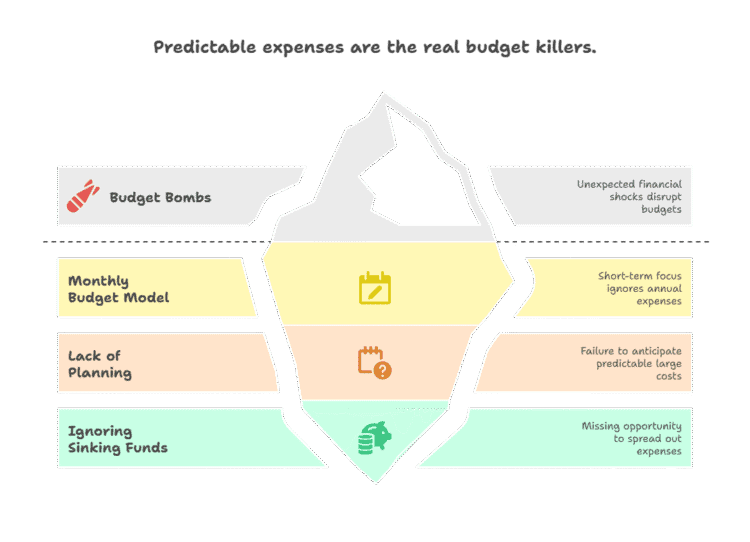
Car insurance comes twice a year. Registration comes once a year. Holiday gifts arrive every December. School costs, travel, memberships, vet visits, home repairs, and annual subscriptions do not politely divide themselves into twelve equal bills.
Consumer.gov explicitly includes bills paid once or twice a year, such as car insurance, when it explains what belongs in a budget. The monthly plan has to account for the whole year, not just the bills that happen to land this month.
The fix: Create sinking funds for predictable non-monthly costs. Estimate the annual amount, divide it by the number of months until the bill is due, and set that amount aside automatically.
- $1,200 annual insurance bill = $100 per month.
- $600 holiday budget = $50 per month.
- $240 annual registration = $20 per month.
- $180 annual subscription renewals = $15 per month.
The point is not the exact numbers. It is the change in category. A predictable expense is not an emergency just because it does not happen every month.
Budgeting Mistake #3: Making the Budget Too Strict
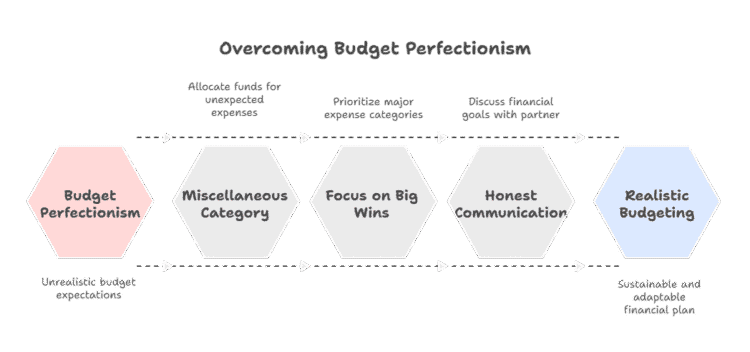
A budget that works only when nothing unexpected happens is not a strong budget. It is a fragile one.
This is where people start treating the budget like a moral scorecard. Spend $25 more than planned on dinner and suddenly the month feels ruined. That creates an all-or-nothing cycle: perfect plan, small miss, frustration, abandonment.
The reframe
A budget is not a promise that every category will be exact. It is a control system. The useful question is not “Did I obey every number?” It is “What changed, and what should I adjust next?”
The fix: Build in a small amount of flexible spending that does not need a courtroom defense. Call it miscellaneous, life happens, or whatever makes sense to you. The amount should fit your cash flow, not a universal percentage.
Then review the month instead of declaring it a success or failure. Consumer.gov recommends comparing what you actually spent with what you planned and using that information to build the next month’s budget. That feedback loop is the budget.
Budgeting Mistake #4: Ignoring Cash-Flow Timing
You can have enough income for the month and still be short on Tuesday.
That sounds obvious, but it explains a lot of “I make enough money, so why am I overdrafting?” situations. A monthly total hides timing. Rent might hit on the first. A credit-card payment might hit on the third. Your paycheck might not arrive until the fifth.
The CFPB’s cash-flow budgeting guidance focuses on exactly this issue: match the timing of money coming in with the timing of money going out, week by week. A monthly budget and a cash-flow calendar solve different problems.
The fix: Put paydays and due dates on the same calendar. If a recurring bill consistently lands in the wrong week, ask whether the due date can be moved. Build a checking-account buffer over time so normal timing does not force you onto a credit card.
Budgeting Mistake #5: Letting a Raise Expand Your Fixed Costs
Lifestyle creep is sneaky because each individual upgrade can be reasonable.
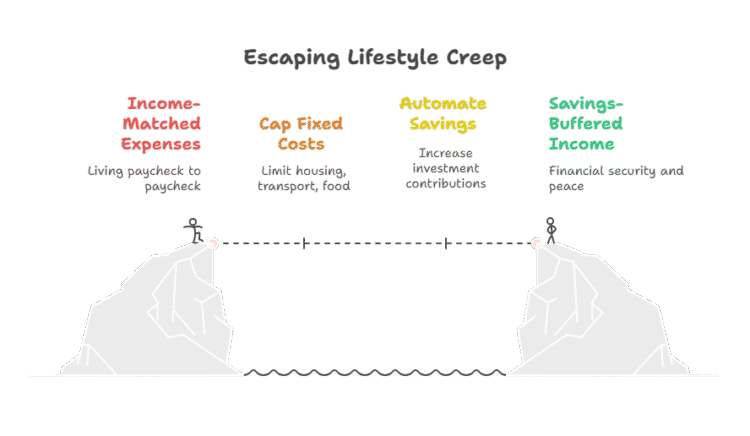
A better apartment. A nicer car. More delivery. A couple of new subscriptions. None of them has to be reckless. The problem appears when a raise gets converted into recurring obligations before any of the new income gets assigned to savings, investing, debt reduction, or another priority.
One pattern I saw repeatedly in planning work was that a higher income did not automatically create more financial room. Sometimes it did the opposite because the household upgraded the expenses that are hardest to reverse.
The fix: Give a raise a job before your lifestyle does it for you. Increase an automatic savings or investment contribution first, then decide how much of the remaining increase you actually want to spend. If this is the problem you recognize, my lifestyle creep guide goes deeper, and the pay-raise guide handles the immediate allocation decision.
If your employer offers a retirement-plan match, check your plan terms before deciding how much to contribute. The IRS notes that many employer plans match some portion of employee contributions, with the exact formula and conditions set by the plan. Do not leave an available match unexamined while obsessing over tiny spending cuts.
Budgeting Mistake #6: Treating a Budget Rule Like a Law
The 50/30/20 rule can be useful. So can zero-based budgeting, envelope budgeting, a conscious spending plan, and plenty of other systems. The mistake is not using a rule. The mistake is treating the rule as proof that your life is wrong.
Housing costs vary dramatically. Childcare can dominate one household’s budget and be zero in another. Medical costs, debt payments, irregular income, family support, and local cost of living can make a generic percentage a poor fit.
The fix: Use a budgeting rule as a comparison point, not a pass-fail grade. If it reveals that one category is unusually high, investigate. If the rule does not fit but your plan covers current obligations, builds resilience, and moves money toward your priorities, customize it.
If you specifically want to test the framework, use the dedicated 50/30/20 rule calculator. I would rather keep the full calculator on the page that owns that decision than turn every budgeting article into a duplicate tool page.
Budgeting Mistake #7: Budgeting Alone for Shared Money
If two people share bills, one person’s perfect spreadsheet cannot solve two different sets of assumptions.
This is less about whether you combine every account and more about whether the household agrees on the decisions that affect shared cash flow. What counts as a large purchase? How much personal spending does each person control? Which goal comes first? What happens when the plan gets tight?
The fix: Agree on the few rules that matter before debating categories. Try these five questions:
- What is our most important shared money goal right now?
- Which bills and goals must be funded before flexible spending?
- How much personal spending can each person make without checking in?
- What dollar amount turns a purchase into a joint decision?
- When the budget does not work, do we cut spending, change the goal, or change the timeline?
That conversation will not make every disagreement disappear. It does make the budget a shared operating plan instead of one person’s enforcement document.
How to Fix a Budget That Keeps Failing
Do not rebuild everything at once. Run one repair cycle:
- Compare plan versus reality. Look at the last one to three months and identify where the gap actually occurred.
- Name the failure type. Was it bad estimates, a non-monthly bill, timing, rigidity, lifestyle creep, a poor-fit rule, or a household coordination problem?
- Fix the system before cutting random spending. Add the missing sinking fund, move a due date, adjust the category, automate part of a raise, or agree on a shared rule.
- Watch the next month. If the same problem repeats, change the assumption again. A budget is supposed to learn.
The big-dollar check
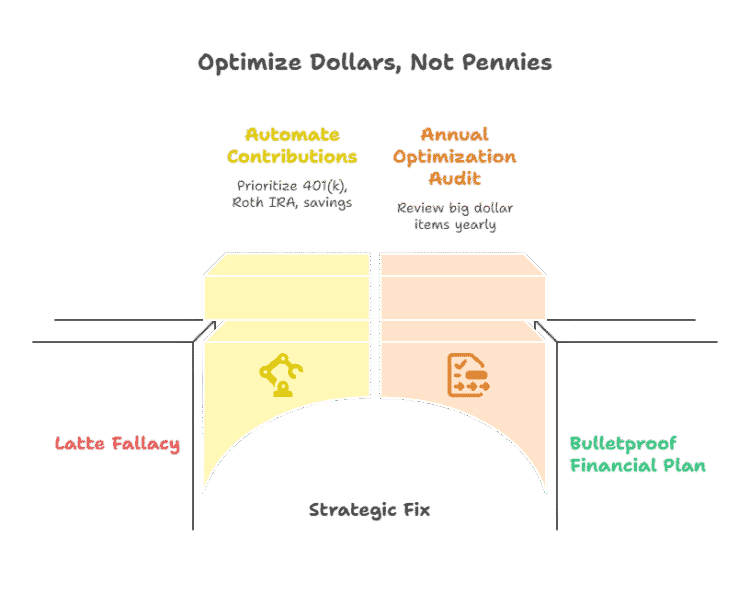
Before you spend an hour hunting for another $5 cut, ask whether a housing, transportation, insurance, debt-interest, subscription, tax, or employer-benefit decision deserves that hour more. Small spending matters when it repeats. Big fixed decisions matter because they can repeat for years.
What to Do Next
Use the next page that matches the problem you found:
- You need to build the plan: How to Create a Spending Plan That Actually Works.
- You need a worksheet and calculator: Free Budget Worksheet and Calculator.
- You want to test a percentage framework: 50/30/20 Rule Calculator.
- Your income rose but your progress did not: How to Avoid Lifestyle Creep.
- You need the reason to keep doing this at all: Why Budgeting Is Important.
Common Budgeting Mistakes FAQ
What are the most common budgeting mistakes?
Common budgeting mistakes include guessing at expenses instead of using real spending history, forgetting annual and irregular costs, making the plan too restrictive, ignoring the timing of paychecks and bills, failing to adjust after income or life changes, forcing a generic rule onto a household it does not fit, and failing to coordinate shared money decisions.
Why does my budget keep failing even when I track everything?
Tracking tells you what happened. It does not automatically fix a budget built on bad assumptions. If your tracking is accurate but the plan still fails, look for non-monthly expenses, cash-flow timing, unrealistic category targets, or fixed costs that have grown faster than your savings capacity.
How often should I review my budget?
At minimum, compare the plan with actual spending at the end of each month and adjust the next month when needed. A short weekly check can also catch timing problems or category drift before they become end-of-month surprises.
Is the 50/30/20 rule a good budget?
It can be a useful starting framework, but it is not a universal standard. Your housing, childcare, medical costs, debt, income pattern, location, and goals may make the percentages a poor fit. Use the rule to ask better questions about your spending, not to decide whether you are succeeding or failing.
Should I cut small purchases like coffee first?
Cut a small recurring expense if you do not value it or if the total meaningfully helps your goal. But do not spend all your attention on tiny purchases while ignoring larger recurring decisions such as housing, transportation, debt interest, insurance, subscriptions, taxes, or an available employer retirement-plan match.
