

When you quit a job, you are still owed the wages you already earned. But you are not automatically entitled to an “extra paycheck.” What arrives after you leave may be your normal final payroll deposit, a separate PTO payout, earned commission, bonus, reimbursement, or a correction.
The timing and contents depend heavily on state law and your employer’s written policies.
Federal law does not require an employer to hand you your final paycheck immediately when you resign. Some states do. Others allow the employer to pay on the next regular payday. That is why two people who quit on the same Friday can have completely different legal deadlines.
The useful question is not “How do I guarantee an extra paycheck after quitting?”
It is “What am I actually owed, when is it due, and what should I document before I lose access to the company systems?”
Show the quick version
- Final wages: You are owed wages for work already performed. Federal law generally requires FLSA wages to be paid by the regular payday, but state final-pay laws can require faster payment.
- PTO: Federal law does not require unused vacation or PTO to be paid out. State law, the employer's written policy, a contract, or a collective bargaining agreement may require it.
- Bonus or commission: Do not assume it is lost or guaranteed. The plan terms, when it became earned, and state law can control whether it must be paid after you leave.
- Severance: The FLSA does not require severance pay. A voluntary separation payment is possible in some situations, but it is a negotiated benefit, not an automatic right.
- Before notice: Save your own pay records, PTO balance, compensation plans, vesting information and the relevant handbook pages before access disappears. Do not take confidential or proprietary company information.
Jump to what you need:
- When should I get my final paycheck after quitting?
- What should be included in my final paycheck?
- Will unused PTO or vacation be paid out?
- What should I save before I give notice?
- Can I get severance if I quit?
- What if my last paycheck is wrong or missing?
- What if I get an extra paycheck after I already left?
On This Page
- When Should I Get My Final Paycheck After Quitting?
- What Should Be Included in Your Final Paycheck?
- Will Unused PTO or Vacation Be Paid Out When You Quit?
- Before You Quit, Run the P.A.C.T. Check
- Can You Get Severance If You Quit?
- What to Do if Your Final Paycheck Is Wrong or Missing
- What If You Get an Extra Paycheck After Quitting?
- After the Final Paycheck, Handle These Three Money Decisions
- Final Paycheck After Quitting FAQ
- Your Next Step Depends on What Went Wrong
- My Take: Your Last Paycheck Is a Reconciliation, Not a Surprise
- How We Verified This
When Should I Get My Final Paycheck After Quitting?
There is no single national deadline. The U.S. Department of Labor says federal law does not require former employees to receive the final paycheck immediately. Federal wage rules generally require covered FLSA wages to be paid by the regular payday for the pay period in which they were earned.
State law can move that deadline forward. This is the first thing I would check before assuming payroll is late.
Three examples of how different state deadlines can be
- California. If you give at least 72 hours’ notice and quit on the date you specified, wages due generally must be paid when you quit. Without 72 hours’ notice, they are generally due within 72 hours.
- Oregon. With at least 48 hours’ notice, final wages are generally due on the last day worked. With less notice, they are generally due within five business days or on the next regular payday, whichever comes first.
- Texas. When an employee quits voluntarily, final pay is generally due on the next regularly scheduled payday after the effective resignation date.
The examples are not a substitute for checking your own state. Final-pay rules can distinguish between quitting and being fired, can treat commissions differently, and can impose penalties for late payment.
Do not use your employer’s normal payroll schedule as proof that the final paycheck is on time. First check whether your state has a special final-pay deadline for people who resign.
What Should Be Included in Your Final Paycheck?
Start with the pieces that are easiest to verify. Your final pay should account for wages already earned through your last compensable work time. For a covered nonexempt employee, that can also include overtime that is legally due.
- Regular wages or salary earned through the separation date.
- Overtime or other FLSA wages already earned. Timing can differ for overtime adjustments under some state payroll rules.
- Earned commissions. Whether a commission was actually “earned” can depend on the compensation plan and state law.
- Unused vacation or PTO when required. This may come from state law, employer policy, an employment agreement, or a collective bargaining agreement.
- A bonus that was already earned under the governing plan. Eligibility can depend on whether the plan requires you to remain employed on the payment date or satisfy other conditions.
- Reimbursable business expenses that are still outstanding. The deadline and process can depend on state law and company policy.
One mistake I saw repeatedly in financial planning was people treating the final deposit as self-explanatory. It is not. A deposit amount can look right while the pay stub reveals missing hours, missing PTO, a commission adjustment, an unexpected deduction, or the wrong separation date.
Do not verify the final paycheck from your bank balance alone. Compare the actual pay stub against your final hours, PTO balance, commission or bonus plan, and any deductions.
Will Unused PTO or Vacation Be Paid Out When You Quit?
Maybe. There is no federal rule that requires every employer to cash out unused vacation or PTO. The Fair Labor Standards Act does not require vacation pay for time not worked. The payout question is usually controlled by state law and the employer’s written policy or agreement.
California is a good example of why the state matters. California treats earned vacation as wages and generally requires earned, unused vacation to be paid when employment ends. Other states may allow a properly written policy to say unused vacation is forfeited.
Before giving notice, save a record of your accrued balance and the actual PTO or vacation policy. Recent worker discussions repeatedly show the same practical failure: the employee loses access to the timekeeping portal and then has to reconstruct what the balance was after the dispute has already started.
A state may require payout of earned vacation but not unused sick leave. A combined PTO bank can also be treated differently from a separate sick-leave bank. Read the policy and the state rule that actually applies to your plan.
Before You Quit, Run the P.A.C.T. Check
The best time to solve a final-pay problem is before you lose access to payroll, benefits and HR systems. I use a simple P.A.C.T. check: Pay records, Administration, Cleanup and Timing.
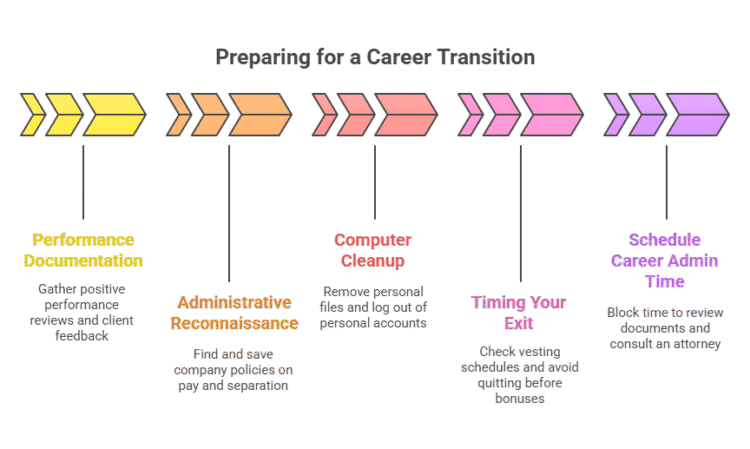
P: Pay records
- Save your recent pay stubs.
- Record your accrued vacation/PTO balance.
- Save the compensation plan that governs commissions or bonuses you may already have earned.
- Save your benefits statement and current retirement-plan vesting percentage.
A: Administration
- Save the handbook sections covering resignation, final pay, PTO, bonuses, commissions, benefits and expense reimbursement.
- Confirm where your final pay stub and tax forms will be delivered after company access ends.
- Make sure payroll and HR have your current personal mailing address and email.
C: Cleanup
- Sign out of personal accounts on employer-owned devices.
- Remove personal files you are permitted to remove.
- Do not delete company records, take confidential data, forward proprietary material to yourself, or assume a work device is yours to wipe.
T: Timing
- Check the exact vesting date for employer 401(k) contributions, stock awards or other benefits.
- Read the bonus or commission plan for any “must be employed on payment date” condition.
- Check when health coverage ends. It may end on your last day, at month-end, or under another plan rule.
- Check whether your state changes the final-pay deadline based on how much notice you give.
Your own 401(k) salary deferrals are always 100% vested. Employer contributions can follow the plan’s vesting schedule. If you are days away from a vesting milestone, verify the Summary Plan Description before choosing a resignation date.
Before notice, create one personal folder containing your own pay stubs, PTO balance, compensation-plan pages, benefit end dates, vesting information and the final-pay policy. That file is far more useful in a dispute than trying to remember what the HR portal said after your login is gone.
Can You Get Severance If You Quit?
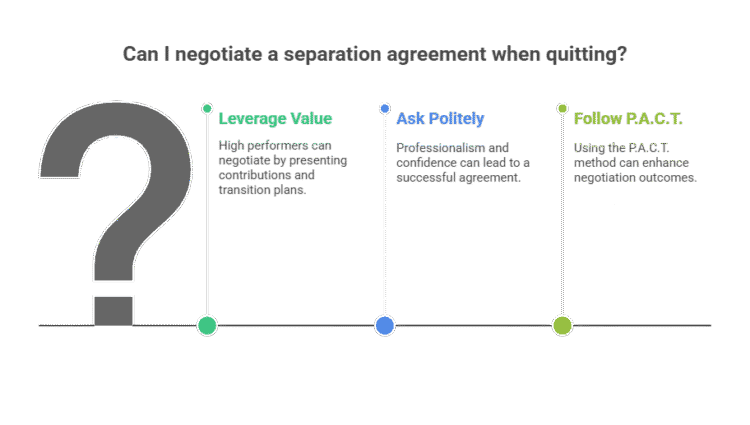
Sometimes, but do not plan your resignation around it. The FLSA does not require severance pay. If you quit voluntarily, an employer generally does not owe you a separation payment unless a contract, plan, policy, or negotiated agreement says otherwise.
A separation agreement can still come up when the employer wants something in return, such as a release of claims, a structured transition, cooperation after departure, or another negotiated term. The details can create legal and tax consequences, so this is one area where reading before signing matters more than clever negotiating language.
Your final paycheck is about compensation already owed. Severance is usually about a separate agreement. Do not let a severance conversation distract you from checking whether your actual wages, PTO and earned compensation were calculated correctly.
What to Do if Your Final Paycheck Is Wrong or Missing
Do not start with an angry phone call. Start by creating a clean paper trail.
- Compare the pay stub with your records. Check the pay period, hours, overtime, PTO, commission, bonus, deductions and separation date.
- Check the deadline that applies in your state. The employer may be late even if the normal payday has not arrived, or may still be within the legal window even though you expected immediate payment.
- Email payroll or HR. Identify the specific discrepancy and attach only the records needed to support it. Ask for the calculation and a written correction date.
- Keep the response. If someone says the payment will arrive on a specific date, save that message.
- Escalate to the correct agency when necessary. State labor agencies often handle final-wage and PTO claims. The U.S. Department of Labor’s Wage and Hour Division handles federal wage-and-hour violations within its jurisdiction.
If the issue is only that a direct deposit appears late, separate an employer-payroll problem from a bank-processing delay before treating it as a wage dispute. I included the dedicated troubleshooting guide in the Next Steps below.
Final-pay deadlines are legal deadlines in some states. A payroll-processing explanation does not automatically extend them. Once the applicable deadline has passed, move from informal follow-up to a documented wage-claim or legal-help path.
What If You Get an Extra Paycheck After Quitting?
First, check the pay stub. An “extra” deposit may be legitimate. Common explanations include a delayed final payroll cycle, PTO payout, commission, bonus, expense reimbursement, or payroll correction.
If the stub shows duplicate wages or something that clearly looks like an overpayment, do not assume the money is yours just because it reached your bank account. Keep the funds available, contact payroll through a verified company channel, and ask for a written itemization of the alleged overpayment before returning money.
Do not send money to a new bank account, payment app, or person simply because someone claiming to be payroll asks you to. A genuine payroll correction should be documented through the employer’s normal process. State rules can also affect how an employer may recover an overpayment.
After the Final Paycheck, Handle These Three Money Decisions
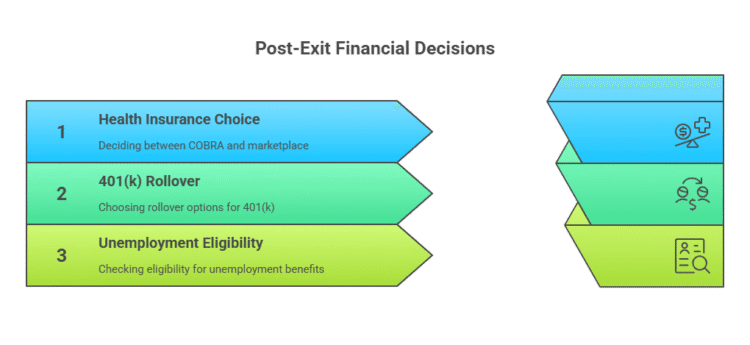
These are important, but they are separate decisions from the final paycheck itself.
- Health insurance. Losing job-based coverage generally creates a Marketplace Special Enrollment Period even when you quit. COBRA may let you keep the employer plan, but you can generally be charged the full premium plus an administrative amount. Compare the actual options before enrolling. I included the health-plan comparison guide in the Next Steps below.
- Old 401(k). Your own contributions are yours. Employer contributions may depend on vesting. Do not rush into a rollover simply because you left. If you are deciding whether to combine old plans and IRAs, use the retirement-account consolidation guide in the Next Steps below.
- Unemployment. A voluntary quit often changes eligibility, but the rules and “good cause” standards are state-specific. Treat that as a separate state unemployment question rather than assuming quitting automatically qualifies or disqualifies you.
Final Paycheck After Quitting FAQ
Do I still get paid if I quit without two weeks’ notice?
You are still owed wages for work you already performed. Giving less notice can change the timing of the final paycheck in some states, and it can affect company benefits or rehire status, but an employer generally cannot erase wages already earned simply because you quit without two weeks’ notice.
Will my last paycheck still come by direct deposit?
Maybe. State law and employer procedure matter. California, for example, has specific rules around final wage payment and prior direct-deposit authorization. Do not assume the final payment method will be identical to a normal payroll cycle. Ask payroll before your last day.
Can my employer hold my final paycheck until I return a laptop or badge?
Do not assume they can. Wage-deduction and final-pay rules vary by state, and some states sharply limit an employer’s ability to hold or offset wages. Return company property promptly, but treat a wage dispute and a property-return dispute as separate questions unless the applicable law or agreement clearly connects them.
Does unused sick time have to be paid when I quit?
Not necessarily. Sick leave can be treated differently from vacation or a combined PTO bank. Check your state law and the written plan rather than assuming every unused leave balance is cashable.
Can an employer refuse to pay a bonus because I quit?
It depends on the bonus plan and applicable law. The key question is whether the bonus was discretionary or had already been earned under an objective formula, and whether the plan lawfully requires employment on a particular date. Save the governing plan before you resign.
My Take: Your Last Paycheck Is a Reconciliation, Not a Surprise
Quitting a job creates enough uncertainty without turning the final paycheck into a guessing game.
Before notice, save the records. After notice, know the state deadline. When the money arrives, reconcile the pay stub line by line.
If an extra deposit shows up, identify it before spending it. If money is missing, document the discrepancy before escalating it. That simple sequence gives you far more control than hoping payroll gets everything right after your access is already shut off.
How We Verified This
These are the authorities and references used to verify the material facts in this article.
