

Missed the FAFSA deadline? You may still have options. The first thing to figure out is which deadline you missed. Federal, state, and college financial aid deadlines are separate. Missing a school or state priority date can cost you some grants or scholarships, but it does not automatically make you ineligible for federal student aid.
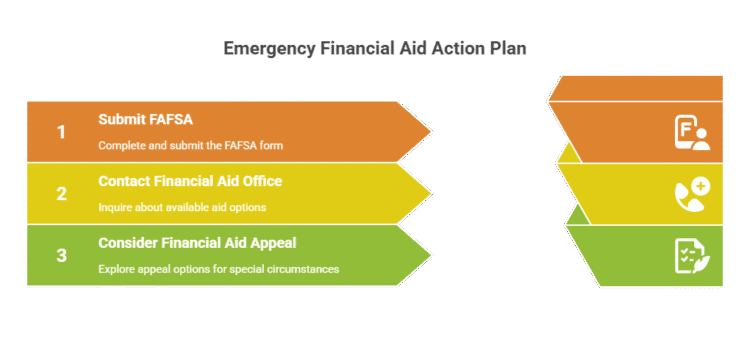
If the federal FAFSA deadline for your award year is still open, submit the form now. Then contact your school’s financial aid office and ask what aid is still available. If you missed the federal deadline too, the options narrow, but you should still call the school before assuming the semester is financially impossible.
Michael’s Take
The panic usually comes from treating “the FAFSA deadline” like one date. It is not. I would first identify which deadline you actually missed, then salvage the money that is still on the table.
Show the quick answer
- Missed a school deadline: File the FAFSA anyway and contact the financial aid office. Institutional aid may be reduced, but some money can still be available.
- Missed a state deadline: Submit the FAFSA and check your state aid agency. Some programs use hard deadlines while others award funds while money remains.
- Federal deadline still open: Submit now. For 2026–27, the federal FAFSA deadline is June 30, 2027.
- 2027–28 FAFSA: Federal Student Aid says the form will be publicly available by Oct. 1, 2026. The federal deadline is June 30, 2028.
- Missed the federal deadline too: Call the school immediately about institutional grants, emergency aid, payment plans, scholarships, and other school-specific options.
On This Page
- I Missed the FAFSA Deadline. Am I Screwed?
- The Three FAFSA Deadlines That Matter
- Missed the FAFSA Deadline? Do These 4 Things Right Now
- What if You Missed the Federal FAFSA Deadline Too?
- Planning Ahead: The 2027–28 FAFSA Opens by October 1, 2026
- After You Submit a Late FAFSA, Check These 5 Things
- The Bottom Line
- Keep the College-Aid Plan Moving
- Find the Right Personal Finance Book for College
- How We Verified This
I Missed the FAFSA Deadline. Am I Screwed?
Probably not, if you missed a state or college priority deadline and the federal deadline is still open. You may have lost access to some limited state grants, school grants, scholarships, or work-study funding, but federal aid can still be available if you submit in time and meet the program’s eligibility rules.
The U.S. Department of Education says students should submit the FAFSA as early as possible because states and schools have their own deadlines and some programs have limited funds. But Federal Student Aid also makes clear that late filers can still qualify for federal student aid up to the federal deadline for the award year.
That distinction is exactly where people get tripped up. In current FAFSA discussions, students routinely panic in June because they think June 30 is the deadline for the next school year, when it may actually be the final federal deadline for the school year that is ending. The award year matters.
Do Not Assume “Late” Means “Denied”
A missed priority deadline and a missed final federal deadline are not the same problem. Before making a borrowing decision, confirm the award year and the exact deadline you missed.
The Three FAFSA Deadlines That Matter
Think of FAFSA deadlines as three separate gates. They can all affect the same financial aid package, but they do not close at the same time.
1. Federal FAFSA Deadline
This is the final federal filing deadline for an award year. For the 2026–27 FAFSA, Federal Student Aid says the form must be received by June 30, 2027. That award year covers July 1, 2026 through June 30, 2027.
If you are eligible and the federal deadline is still open, filing late can still preserve access to federal aid such as the Federal Pell Grant and federal student loans. Federal Work-Study is different because schools have limited allocations, so filing late can reduce the practical chance of receiving it.
2. State Financial Aid Deadline
State deadlines vary widely. Some are firm dates. Others are priority dates. Some programs explicitly say awards are made while funds remain. That means missing the state deadline can hurt even when the federal FAFSA is still open.
Use the official Federal Student Aid deadline page as a starting point, then verify the current rules with your state’s higher education or student aid agency.
3. College or Institutional Priority Deadline
Your college can have its own priority date for school-funded grants, scholarships, campus-based aid, and packaging. Missing it does not necessarily make your FAFSA useless. It can mean the most flexible or limited school money has already been committed.
This is why your school’s financial aid office matters so much after a late filing. The FAFSA tells the school what federal aid you may qualify for. The school tells you what its remaining money and procedures look like.
The Deadline Rule I Would Remember
- Federal deadline tells you whether the federal FAFSA window is still open.
- State deadline tells you what state aid may already be at risk.
- College deadline tells you what school money may already be at risk.
Missed the FAFSA Deadline? Do These 4 Things Right Now
Do not spend another day trying to calculate what you “probably” lost. Get the application and the school involved.
Step 1: Submit the FAFSA Anyway
If the form for your award year is still available, submit it at the official FAFSA site. Do not wait until you have talked to every school or figured out every possible consequence.
If you run into a website or contributor problem, use the MRM FAFSA troubleshooting guide rather than letting a technical issue become another missed day.
Step 2: Contact the Financial Aid Office
Tell them you submitted late and ask four direct questions:
- Am I still eligible for federal aid for this award year?
- Did I miss any school-funded grants or scholarships?
- Is there a late-filing appeal, waitlist, reconsideration process, or remaining institutional aid?
- What deadline do I need to meet now so my classes, housing, or registration are not affected?
“Hi, I realized I missed your priority financial aid deadline, but I have now submitted my FAFSA. Can you tell me what federal, state, and institutional aid I can still be considered for, and whether there is any late-filing appeal or waitlist I should complete?”
Step 3: Check Your State Aid Rules
Do not assume the college’s deadline and the state’s deadline are identical. Some state programs have separate applications, GPA requirements, residency rules, or later deadlines. Others stop awarding once funds are exhausted.
Step 4: Build a Backup Funding Plan Before You Borrow Privately
If aid was reduced, ask about school payment plans, emergency grants, departmental scholarships, tuition-payment extensions, campus jobs, and outside scholarships before jumping straight to a private student loan.
For a wider funding backup, use the MRM guide to ways to pay for college. The point is not to pretend a missed grant does not matter. It is to avoid turning one missed deadline into an expensive borrowing decision made in panic.
What if You Missed the Federal FAFSA Deadline Too?
This is the tougher situation. Once the final federal FAFSA deadline for an award year has passed, you generally cannot submit a new FAFSA for that year and unlock federal aid retroactively just because you forgot.
That does not mean you should disappear from the financial aid office. Ask whether the school has institutional emergency grants, completion grants, short-term payment arrangements, tuition deferrals, school scholarships, or other nonfederal resources. If your bill is already due, ask what happens to enrollment while the school reviews your options.
If the problem was a FAFSA technical failure close to a deadline, keep screenshots, error messages, case numbers, and timestamps. They do not guarantee an exception, but documentation gives the school something concrete to evaluate instead of “the website didn’t work.”
One Thing Not to Do
Do not take a private loan tonight just because your student account shows a balance. First find out whether federal aid is still processing, whether the school can hold your classes, and what school or state money is still possible.
Planning Ahead: The 2027–28 FAFSA Opens by October 1, 2026
If you are reading this in late September 2026, there is an important forward-looking update. Federal Student Aid says the 2027–28 FAFSA will be publicly available by October 1, 2026. The Department has also opened early-access beta testing to students and families ahead of the public launch.
Submitting during beta does not give you priority over students who wait for the public launch. The real advantage is simply getting the process started early.
The federal deadline for the 2027–28 FAFSA is June 30, 2028, but that is the last federal stop, not the date I would plan around. State and school priority deadlines can arrive much earlier.
For the 2026–27 award year, the maximum Federal Pell Grant is $7,395. Federal Student Aid says the 2027–28 maximum Pell Grant will be announced in early 2027. That is exactly the sort of number worth checking again once the new award year is finalized.
After You Submit a Late FAFSA, Check These 5 Things
- Confirm the form shows as submitted. A FAFSA that is waiting on a required contributor signature is not the same thing as a completed submission.
- Review your FAFSA Submission Summary. Check the Student Aid Index, Pell Grant eligibility information, warnings, and any items requiring correction.
- Make sure the correct schools are listed. Federal Student Aid allows you to list up to 20 schools on the online FAFSA form.
- Complete any separate state application. Some states require more than the FAFSA.
- Watch the school’s portal and email. Verification requests, missing documents, and aid-offer updates can create a second delay even after the FAFSA itself is submitted.
Federal Student Aid says many FAFSA forms are now processed immediately or within a few days, and students should review the Submission Summary and complete any state aid application after filing. Fast processing does not guarantee fast school packaging, so keep checking the college portal too.
Example
Suppose your college’s priority deadline was March 1, but you finally submit the FAFSA in August for the 2026–27 award year. The federal deadline is still open until June 30, 2027. You may still qualify for federal Pell Grant or federal loan aid if otherwise eligible, while some state or college grants may already be reduced or unavailable. The correct move is to file first, then ask the school exactly which parts of the package are still in play.
The Bottom Line
If you missed a FAFSA deadline, do not start with “I’m screwed.” Start with which deadline did I miss?
If it was a college or state priority deadline, file anyway and call the financial aid office. If the federal deadline is still open, you may still have federal aid available. If the final federal deadline has passed, shift immediately to school-specific aid, scholarships, payment options, and other funding sources.
And for next year, do not put June 30 on your calendar as your target. Put October on it. The final federal deadline is a safety net. The best aid opportunities often disappear much earlier.
How We Verified This
These are the authorities and references used to verify the material facts in this article.
