


A spending plan is simply a written decision about what your income needs to do before the month gets away from you. Start with take-home income, list your real expenses, set aside money for irregular costs, choose a few priorities, and then adjust the plan as real life happens.
Hi, I’m Michael Ryan, a retired financial planner. After 25 years of guiding individuals, families, and business owners through the financial maze, I’ve seen firsthand what works and what doesn’t.
What usually works is not the most complicated budget. It is the one you can look at quickly, understand, and keep using after the first imperfect month.
Quick Start
If you only do three things today: write down monthly take-home income, review the last month or two of actual spending, and create a separate line for expenses that do not arrive every month. That third step is where many “perfect” budgets quietly break.
50/30/20 Budget Rule Calculator
Compare your monthly spending with the 50/30/20 budgeting guideline. The percentages are flexible reference points, not requirements.
Your Budget Snapshot
This comparison shows how your entered amounts line up with the guideline.
| Category | Guideline target | Your amount | Comparison |
|---|---|---|---|
| Needs | $0 50% | $0 0% of income | — |
| Wants | $0 30% | $0 0% of income | — |
| Savings and additional debt repayment | $0 20% | $0 0% of income | — |
Needs
Actual percentage of monthly income
Wants
Actual percentage of monthly income
Savings and debt repayment
Actual percentage of monthly income
What your numbers suggest
About the guideline: The 50/30/20 approach is a general budgeting framework, not a required allocation. Housing costs, healthcare, caregiving, debt, taxes, location, income level, and retirement circumstances can make different percentages more appropriate.
This calculator provides educational estimates based only on the amounts entered. It does not provide personalized financial, investment, tax, legal, insurance, or debt advice.
See a problem or have a suggestion? Contact Michael Ryan Money .
The 50/30/20 split is a useful starting point, not a rule you have to obey. Use the calculator to see what the percentages look like with your income, then change the plan to fit your actual housing costs, debt, family responsibilities, and goals.
How to Create a Spending Plan in 5 Steps
The basic mechanics are refreshingly simple. Consumer.gov’s budgeting guidance uses the same core sequence: list expenses, write down income, subtract expenses from income, and use what actually happened this month to improve the next one.
Step 1: Start With Spendable Income
Use the money that actually reaches your household, not your salary headline. For most employees, that means take-home pay after payroll deductions. Add recurring income you can reasonably count on.
If income changes from month to month, do not build the plan around your best month. Consumer.gov suggests using annual income divided by 12 when pay does not arrive evenly each month. I prefer an even more conservative version for highly variable income: build the core plan around a level you can cover in a weak month, then give extra income a job when it arrives.
Step 2: Track What You Actually Spend
Before cutting anything, find out where the money is going. The Consumer Financial Protection Bureau recommends tracking spending for at least two weeks, or even a month, and then reviewing what surprised you.
- Fixed obligations: rent or mortgage, insurance, loan payments, subscriptions.
- Variable essentials: groceries, utilities, fuel, medications.
- Flexible wants: restaurants, entertainment, hobbies, shopping.
- Future-you expenses: savings, debt reduction, annual bills, repairs, gifts, travel and other irregular costs.
Michael’s Rule
Do not “fix” last month’s spending before you record it. A useful spending plan starts with the truth. If restaurants were $600, write $600. You can decide what to change after you know what you are actually changing.
Step 3: Turn Irregular Expenses Into Monthly Expenses
This is the part I see people miss most often. Car insurance, annual subscriptions, home repairs, holiday spending, vet bills and appliance replacement may not happen every month, but that does not make them surprises.
If a $1,200 bill is due once a year, the spending-plan version is roughly $100 a month. Move that money aside as you go. You can use separate sinking-fund categories or a smaller number of grouped categories; the accounting system matters less than knowing that the money already has a future job.
The Emergency-Fund Test
If you know the roof, tires, holidays, insurance premium or school clothes will eventually cost money, try to plan for them. Reserve the emergency fund for costs that are genuinely hard to predict or too large to pre-fund comfortably.
Step 4: Choose Priorities Before Percentages
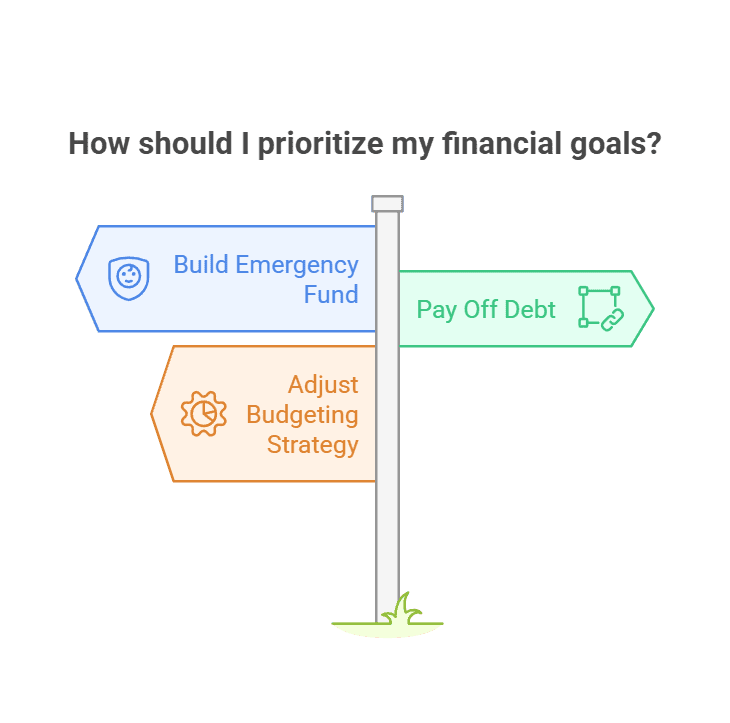
A percentage rule can help you see tradeoffs, but your priorities come first. If you are behind on essential bills, carrying expensive credit-card debt, or have no cash buffer, your plan should reflect that reality before it worries about hitting a fashionable ratio.
Emergency Fund or Debt First?
I generally do not like an all-or-nothing answer. A household with no cash cushion can pay down debt aggressively and then immediately put the next car repair back on a credit card. Build enough breathing room to stop every normal setback from becoming new debt, then push harder on expensive balances. For a deeper debt-payoff framework, see my guide to the Dave Ramsey Baby Steps and where I would modify them.
Use 50/30/20 as a Diagnostic, Not a Grade
The familiar 50/30/20 framework allocates 50% of take-home pay to needs, 30% to wants and 20% to saving or debt reduction. It can quickly reveal that one part of the budget is consuming more than expected. But someone in a high-cost housing market may need 60% for needs; someone attacking debt may temporarily want far more than 20% going toward future goals.
If you want to work specifically with that framework, use my 50/30/20 budget calculator and guide.
Step 5: Review the Plan Without Starting Over
A spending plan is a forecast. Forecasts are allowed to be wrong. At the end of the month, compare the plan with reality and ask three questions:
- What was truly different this month? A one-time medical bill should not automatically become next month’s normal.
- What did I repeatedly underestimate? Groceries that miss the target every month probably need a more realistic target.
- What category needs a rule rather than more tracking? A restaurant cap, a weekly fun-money amount or an automatic transfer can be easier to follow than dozens of tiny categories.
The CFPB’s current budgeting guidance makes the same practical point: choose a system that is easy enough to use in real time. A daily journal, receipts reviewed weekly, an app or a spreadsheet can all work. The best tool is the one you will still look at when the month gets messy.
Why Budgets Fail Even When the Math Is Right
People often assume a failed budget means they lack discipline. More often, the system is asking too much work at the exact moment someone needs a quick answer.
- The plan ignores irregular expenses. Every repair becomes an “emergency.”
- There are too many categories. Tracking becomes a second job.
- The budget lives in three places. Bills are in one app, spending in another and savings somewhere else.
- The plan has no feedback loop. It is created once and never compared with reality.
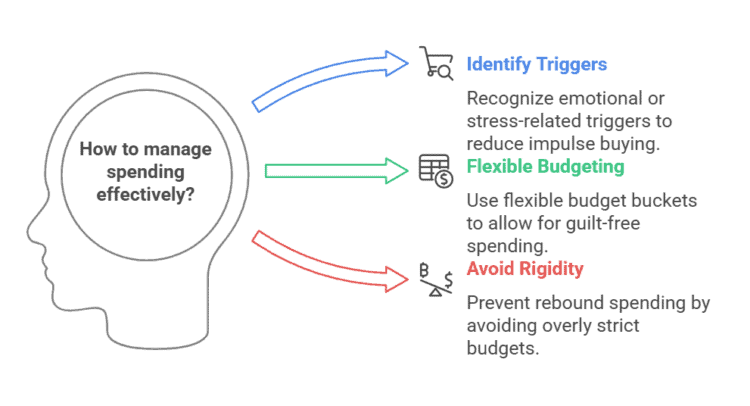
- Every category is treated as rigid. One bad week makes the entire month feel ruined.
That last problem is why I prefer the phrase spending plan. You are deciding what money is for, not proving whether you were “good” or “bad” this month.
Make Overspending Harder Before It Happens
The CFPB’s research on managing spending found that people often want to use budgets but do not use them to make decisions at the moment of purchase. That is a useful distinction: the problem is not always creating the plan; it is getting feedback soon enough to change the decision.
Use a Simple Friction Rule
My favorite example is the 48-hour rule for nonessential purchases. Put the item on a list and wait two days. You are not promising never to buy it. You are separating the urge from the decision.
The 48-Hour Rule for Impulse Buys
I once came close to buying an expensive camera and forced myself to wait. With a little distance, I realized part of the purchase was about impressing someone else. Once that emotion was removed from the decision, I no longer wanted the camera nearly as much.
That is what a good spending rule does: it protects you from having to win a willpower contest every time.
Budgeting App, Spreadsheet or Paper: Which Is Best?
| Method | Best fit | Watch out for |
|---|---|---|
| Budgeting app | Automatic transaction tracking, couples, people who want alerts and dashboards | Subscription cost, setup complexity, abandoning the app after the novelty wears off |
| Spreadsheet | Customization, irregular income, people who want full control | Overbuilding it until maintenance becomes the hobby |
| Paper or notes | Simple weekly limits, people who dislike apps | Manual totals and less automation |
The real-people research for this update reinforced something I saw for years as a planner: people get stuck when a budgeting system forces them to organize money in a way that does not match how they think. One recent budgeting discussion boiled it down nicely: the best budget tool is the one you actually look at.
If you want a ready-made starting point, download or copy my free budget worksheet and calculator. You can also use the government’s Consumer.gov Budget Worksheet.
Three Budgeting Myths Worth Dropping
- “A budget is supposed to restrict me.” A useful plan protects spending you care about by deciding what you can afford before the money disappears.
- “I need the perfect percentages.” Percentages are diagnostics. Your bills and priorities are the plan.
- “If I overspend one category, I failed.” Move money, learn what happened and update the next month. The goal is control, not a perfect score.
Keep a Little Room for Being Human
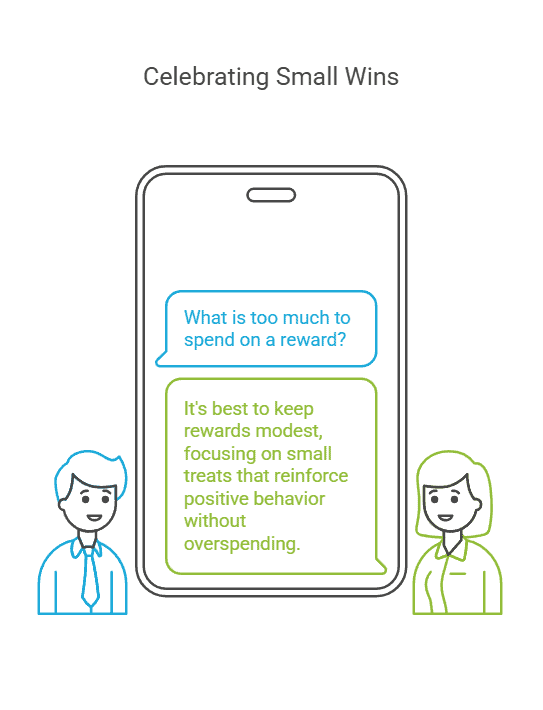
When I paid off my first credit card, I did not celebrate by blowing the budget. I bought myself a fancy coffee. Small rewards can make progress feel real without undoing it.
Your One-Month Spending Plan Checklist
- Write down monthly take-home income.
- Review at least two weeks of real transactions; a month is better.
- List fixed bills and minimum debt payments.
- Estimate variable essentials from actual history.
- Divide annual and irregular costs into monthly sinking-fund amounts.
- Choose one or two current priorities: emergency savings, debt, retirement, a near-term goal.
- Give yourself a realistic flexible-spending amount.
- Check the plan weekly for five minutes.
- At month-end, compare plan versus reality and change only what the evidence tells you to change.
