
A trust is a legal arrangement in which a trustee holds and manages property for one or more beneficiaries under rules set by the person who created the trust. In plain English: it is a set of instructions plus an ownership structure for certain assets.
The important part is what a trust is not. It is not automatically a tax shelter. It does not magically protect every asset from creditors or nursing-home costs. It does not replace every other estate-planning document. And not everyone needs one.
What a trust can do depends on the type of trust, your state, what assets are actually connected to it, and what problem you are trying to solve.
Show the 30-second version
On This Page
- What Is a Trust?
- How Does a Trust Work?
- What Are the Main Benefits of a Trust?
- What Does a Trust Not Do?
- Revocable vs. Irrevocable Trust: What Is the Difference?
- What Are the Main Types of Trusts?
- Trust vs. Will: Do You Need Both?
- How Do Beneficiaries Get Money From a Trust?
- Do I Need a Trust?
- How Do You Set Up a Trust?
- What Should You Put in a Revocable Living Trust?
- How Much Does a Trust Cost?
- At What Net Worth Should You Get a Trust?
- What Is the Biggest Downside of a Trust?
- Choose your next estate-planning question
- Bottom Line
What Is a Trust?

The IRS definition of a trust describes it generally as a relationship in which one person holds title to property subject to an obligation to keep or use that property for another person’s benefit.
Most estate-planning trusts involve three roles:
- Grantor, settlor, or trustmaker: creates the trust and sets its rules.
- Trustee: manages trust property under those rules.
- Beneficiary: receives income, property, or other benefits from the trust.
One person can wear more than one hat. With a typical revocable living trust, for example, you may create the trust, serve as your own trustee, and remain the current beneficiary while you are alive.
That is why I would not think of a trust as a locked box you hand to somebody else. A revocable living trust is closer to a legal ownership-and-instructions system that you can usually continue controlling while you are alive and capable.
How Does a Trust Work?
A trust works only when its legal document, ownership of assets, and beneficiary plan actually line up.
The basic sequence looks like this:
- You identify the job. Probate avoidance? Incapacity planning? Control over how an inheritance is distributed? Special-needs planning? Estate-tax planning? Different jobs can require very different tools.
- The trust document sets the rules. It names trustees and beneficiaries and explains what the trustee may or must do.
- The right assets are coordinated with the trust. Some assets may be retitled to the trust. Others may pass by beneficiary designation or another non-probate method instead.
- The trustee follows the rules. During your life, after incapacity, or after death, the trustee manages or distributes trust property according to the document and applicable state law.
That third step is where a lot of otherwise decent plans fall apart.
I have seen people spend real money creating a beautiful estate-planning binder, put it on a shelf, and mentally mark the project “done.” But the paperwork is only one layer. If the house, taxable account, business interest, beneficiary designations, and trust document are all pointing in different directions, the family still has a coordination problem.
The document is not the plan. The document, asset ownership, and beneficiary designations together are the plan.
What Are the Main Benefits of a Trust?
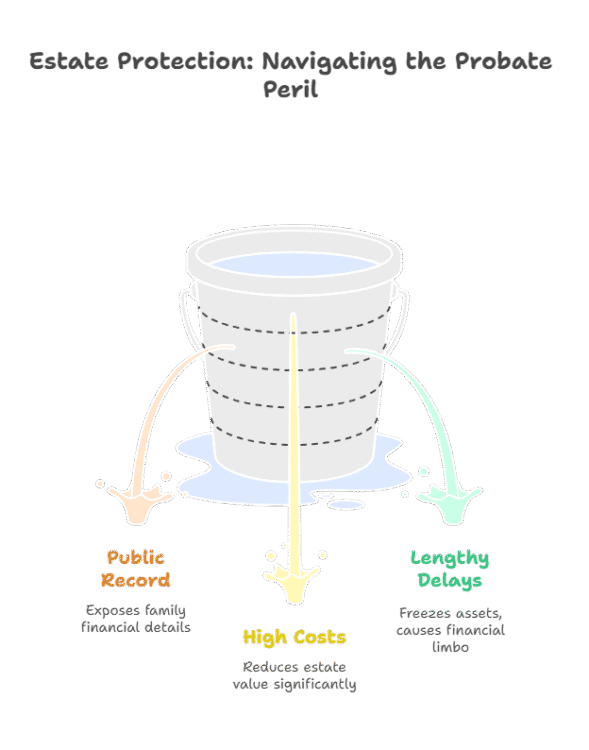
The benefits depend on the trust type, but the most common reasons people consider a trust are probate management, incapacity planning, privacy, distribution control, and specialized tax or beneficiary planning.
A trust can help avoid probate for assets properly held in it
Assets owned by a revocable living trust generally can be administered by the successor trustee without those particular assets passing through the probate process.
But this is where broad internet claims get sloppy. Probate is not equally expensive or difficult in every state, and a trust is not the only way assets can pass outside probate. Joint ownership, payable-on-death or transfer-on-death arrangements, and beneficiary designations may also transfer certain assets outside a will.
So “trust versus probate” is not a national yes/no question. The better question is: Which of your assets would otherwise require probate in your state, and is a trust the cleanest way to handle them?
If you want the mechanics, see my guide to what probate is and how probate avoidance works.
A trust can create continuity if you become incapacitated
A revocable living trust can name a successor trustee to manage trust assets if you can no longer manage them yourself. That can be useful, but it does not make powers of attorney, health-care directives, or other incapacity documents irrelevant. Those tools handle different jobs.
This is one reason I prefer thinking in systems instead of documents. A trust can be an important piece of an estate plan without being the whole estate plan.
A trust can control how and when beneficiaries receive assets
A trust can hold assets for a child or other beneficiary instead of forcing an immediate outright distribution. The document can establish timing, standards, trustee discretion, and contingencies.
That can matter when a beneficiary is young, financially inexperienced, in a complicated marriage, vulnerable to exploitation, or has other circumstances where an outright inheritance is not the best fit.
A trust can offer more privacy than probate
Probate filings are generally court records, although what is publicly accessible varies by jurisdiction. Assets administered privately under a trust may avoid some of that court-file exposure.
Certain specialized trusts can solve specialized tax or benefit problems
Irrevocable life insurance trusts, special needs trusts, charitable trusts, QTIP trusts, GRATs, and other advanced structures can have very different tax, asset-control, creditor, marital, or public-benefit consequences.
Those are not just fancier versions of a revocable living trust. They are different legal tools with different tradeoffs. I would not choose one from a chart on the internet.
For 2026, the federal estate-tax basic exclusion amount is $15 million per individual, according to the IRS Form 706 instructions. That means federal estate tax is not the primary trust reason for most households, although state estate or inheritance taxes and advanced planning can still matter in particular situations.
What Does a Trust Not Do?
This is the section I wish more trust articles included.
A revocable living trust does not automatically reduce your federal estate tax
Because you generally retain control over a revocable living trust, putting assets into one does not by itself remove those assets from your taxable estate.
Advanced irrevocable strategies may produce different tax results, but that is a different planning conversation.
A revocable living trust does not automatically protect your own assets from creditors
A standard revocable trust is primarily an estate-planning and management tool, not a magic liability shield for the person who created it.
A trust does not fix bad beneficiary designations
Retirement accounts and life insurance commonly pass under beneficiary-designation rules. Those designations need to be coordinated with the estate plan. Naming a trust as beneficiary can sometimes be appropriate, but doing it casually—especially with retirement accounts—can create tax and distribution consequences that deserve professional review.
A trust does not eliminate every possible court proceeding
Trust disputes, creditor issues, title problems, omitted assets, tax matters, or badly drafted provisions can still create legal work. “Avoids probate” does not mean “guarantees no lawyers, no court, and no administration.”
A trust does not automatically make you eligible for Medicaid long-term-care benefits
Medicaid eligibility guidance has specific trust and transfer-of-assets rules. Medicaid states that a revocable trust funded with an applicant’s assets can be treated as an available resource, while transfers for less than fair market value within the applicable five-year look-back period can affect long-term-care coverage. Specialized exceptions exist, including certain special-needs and pooled trusts.
If Medicaid planning is the goal, that is an elder-law question—not a reason to drop assets into a generic “irrevocable trust” and hope for the best.
Revocable vs. Irrevocable Trust: What Is the Difference?
The simplest distinction is control.
A revocable living trust can usually be changed or revoked by the person who created it while that person is alive and competent. It is commonly used for probate planning, incapacity management, privacy, and distribution control.
An irrevocable trust generally involves giving up significantly more control and may be used for specialized tax, asset-protection, insurance, charitable, Medicaid, or beneficiary-planning purposes. Whether and how an irrevocable trust can later be modified depends on the document and applicable state law.
Do not read “irrevocable” as “better protection” and stop there. Giving up control is not a side effect. It is often part of the mechanism.
What Are the Main Types of Trusts?
You do not need to memorize a trust dictionary. Start with the problem.
- Revocable living trust: commonly used for probate avoidance, incapacity continuity, privacy, and distribution instructions while preserving flexibility during life.
- Testamentary trust: created under a will and becomes effective at death; useful when assets should remain in trust for beneficiaries after probate.
- Special needs trust: designed to hold assets for a person with disabilities while preserving eligibility for certain means-tested benefits when structured correctly. See my special needs trust guide.
- QTIP trust: may be used in marital and blended-family planning to provide for a surviving spouse while controlling where remaining property ultimately passes.
- A/B or credit-shelter trust: an older but still potentially relevant marital-estate-planning structure whose usefulness depends on current federal and state tax law. See my A/B trust guide.
- Irrevocable life insurance trust (ILIT): may be used to own life insurance for specific estate-liquidity and tax-planning goals.
- Charitable trusts: can combine charitable giving with income or transfer-tax objectives under detailed tax rules.
The point is not to collect trust types. It is to match the tool to the job.
Trust vs. Will: Do You Need Both?
This is usually the wrong place to force an either/or choice.
A will can name an executor, direct probate assets, nominate guardians for minor children, and provide a backstop for property that does not pass another way. A revocable living trust can manage assets titled to it during life and after death and can reduce the amount of property that needs probate.
Even people with a revocable trust commonly still have a pour-over will or other will as part of the plan.
What matters is how the documents and asset-transfer mechanisms work together.
If you are deciding between the two, start with the fuller last will and testament guide and then compare your state’s probate process, your assets, and your family situation.
How Do Beneficiaries Get Money From a Trust?
There is no single distribution rule for every trust. The trustee follows the trust document and applicable law. A trust might require distributions at certain ages, permit payments for health, education, maintenance, or support, give the trustee discretion, distribute income on a schedule, or ultimately distribute everything and terminate.
That is one of the biggest advantages of a trust—and one of the reasons boilerplate can be dangerous. The distribution rules should match the actual beneficiary and goal. A 12-year-old child, a financially capable 40-year-old, and a beneficiary receiving means-tested public benefits should not automatically get the same trust design.
If you are a beneficiary trying to understand an existing trust, the first document that matters is the trust agreement itself. It defines what the trustee may distribute, when, and under what conditions.
Do I Need a Trust?
Maybe. But “you own a house, therefore you need a trust” is too crude to be useful.
I would put more weight on these questions:
1. Would probate create meaningful friction in your state or situation?
If most important assets would otherwise require a costly, slow, multi-state, or administratively difficult probate, a revocable living trust may be more compelling.
If your state has a relatively straightforward probate process and most assets already transfer cleanly through beneficiary designations or other mechanisms, the incremental benefit may be smaller.
2. Do you own real estate in more than one state?
Multiple-state real estate can create additional probate administration. This is one situation where a trust often deserves a serious look.
3. Do you want a successor to manage assets during incapacity?
A funded revocable trust can create a continuity mechanism for trust assets without waiting until death.
4. Do you want beneficiaries to inherit under continuing rules rather than outright?
Minor children, blended families, vulnerable beneficiaries, spendthrift concerns, or a desire to control timing can all make trust planning more useful.
5. Are you solving an advanced tax, public-benefit, or asset-protection problem?
If yes, the trust question becomes much more technical. The appropriate tool may be irrevocable, and the legal/tax cost of getting it wrong can be substantial.
6. Are you willing to maintain the plan?
This matters more than people think. If you create a revocable trust but never transfer appropriate assets to it, never update the plan after major life changes, and keep beneficiary designations pointing somewhere else, you may have bought an expensive binder instead of a functioning estate plan.
How Do You Set Up a Trust?

The broad process is straightforward even though the legal details are state-specific.
- Define the problem you are trying to solve. Do not begin by shopping for a trust type.
- Inventory assets and transfer methods. List real estate, taxable accounts, retirement accounts, insurance, business interests, bank accounts, and existing beneficiary designations.
- Choose trustees and beneficiaries. Include successor decision-makers and contingencies.
- Have the documents drafted for your state and situation. For a consequential estate plan, legal advice is usually worth more than document generation alone.
- Fund and coordinate the plan. Retitle appropriate assets, review beneficiary designations, and make sure the will, powers of attorney, health-care documents, and trust are not contradicting one another.
- Review after major life or law changes. Marriage, divorce, births, deaths, moves, major property purchases, business events, and substantial tax-law changes can all justify another look.
Notice what is not on that list: “Pick whichever trust sounds richest.”
What Should You Put in a Revocable Living Trust?
Often-considered assets include real estate, non-retirement investment accounts, certain bank accounts, and some business interests, depending on the asset and state law.
But some assets need special handling. Retirement accounts are a classic example: you generally do not retitle an IRA or 401(k) into a revocable trust during life simply because you created a trust. Beneficiary planning for retirement accounts has its own tax rules.
The implementation question is asset-by-asset, not “put everything in the trust.”
How Much Does a Trust Cost?
Cost varies dramatically by state, attorney, complexity, number of documents, tax planning, deeds, and how much implementation help is included.
That makes a national “average trust costs $X” number less useful than it looks. Ask what the quoted fee includes: trust drafting, wills, powers of attorney, health documents, deeds, funding instructions, beneficiary review, follow-up meetings, and later amendments can all change the real cost.
I have a separate guide to living trust setup costs because the cost question deserves more than a throwaway number.
At What Net Worth Should You Get a Trust?
There is no universal net-worth trigger.
Net worth can matter for tax planning, but ordinary revocable-trust usefulness often turns more on what you own, where you own it, how it transfers, and what you want to happen than on a single account-balance threshold.
A $900,000 estate with real estate in two states and a complicated family can have a stronger trust case than a larger but very simple estate whose major assets transfer cleanly by beneficiary designation.
For federal estate tax, the 2026 basic exclusion amount is $15 million per individual. That is a tax threshold—not a “you need a trust at $15 million” threshold.
What Is the Biggest Downside of a Trust?
For a revocable living trust, the main downsides are usually cost, setup work, funding/retitling, and ongoing coordination.
For an irrevocable trust, the tradeoffs can be much larger because you may surrender substantial control or access to assets in exchange for the legal or tax result the trust is designed to create.
A trust is useful when the problem it solves is worth those costs. It is not useful because the word “trust” sounds more advanced than “will.”
